





Now Reading: Vitamin B12 and D3: The Essential Vitamins for Energy, Immunity, and Total Wellness
-
01
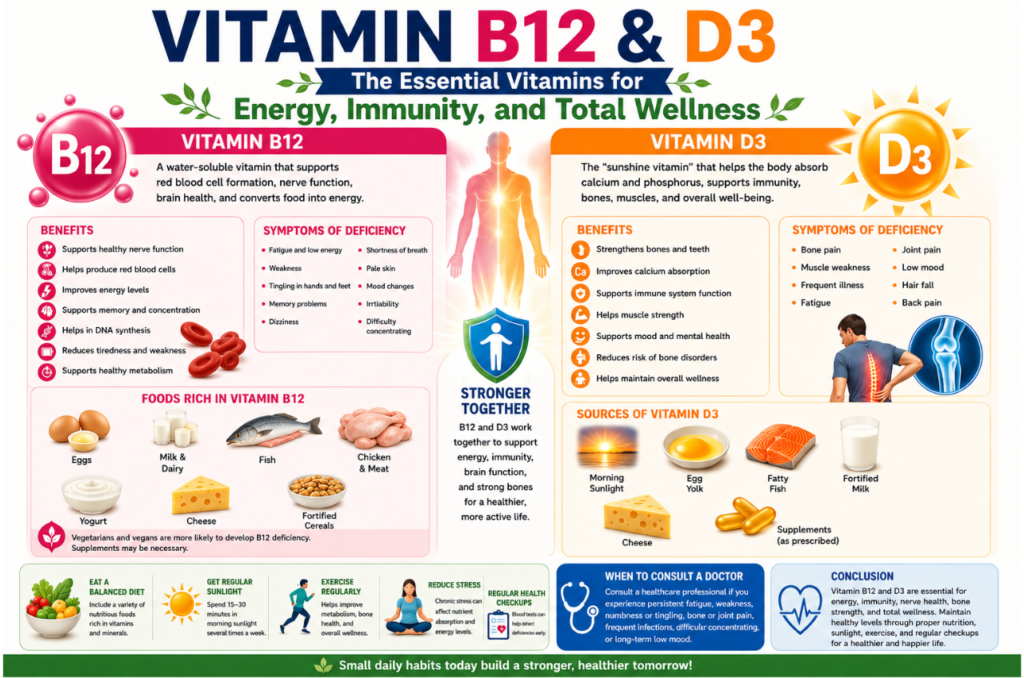
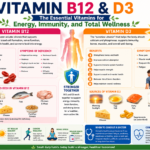
Vitamin B12 and D3: The Essential Vitamins for Energy, Immunity, and Total Wellness
Vitamin B12 and D3: The Essential Vitamins for Energy, Immunity, and Total Wellness

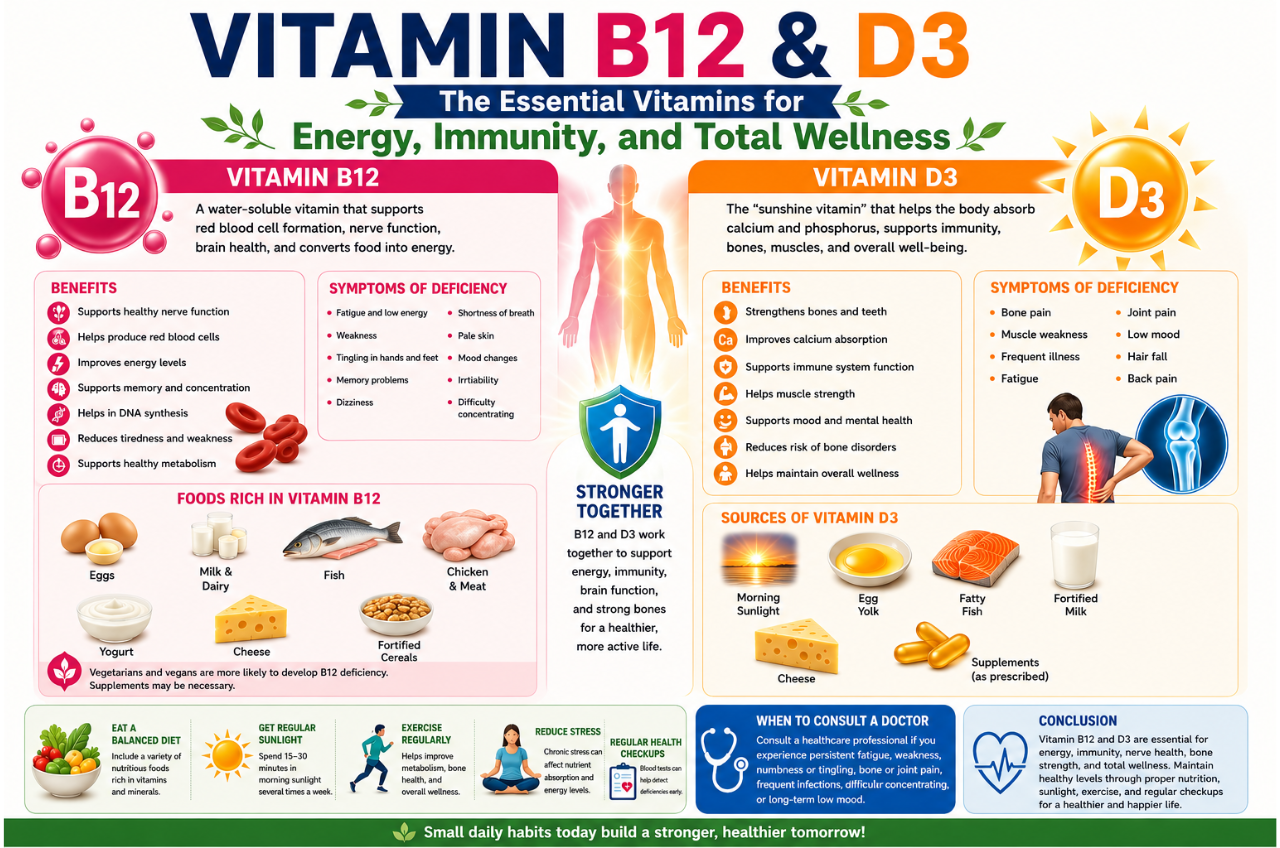
In today’s fast-moving world, maintaining optimal health requires more than just exercise and a balanced diet. Two nutrients that have gained global attention for their powerful health benefits are Vitamin B12 and Vitamin D3. These vitamins play a critical role in supporting energy production, brain function, immunity, bone strength, and overall well-being.
Millions of people worldwide suffer from hidden deficiencies of these vitamins without realizing it. Fatigue, low immunity, muscle weakness, mood changes, and poor concentration are often linked to inadequate levels of Vitamin B12 and D3.
This complete guide explains everything you need to know about Vitamin B12 and Vitamin D3, including their benefits, deficiency symptoms, best food sources, and why these nutrients are essential for modern lifestyles.
What Is Vitamin B12?
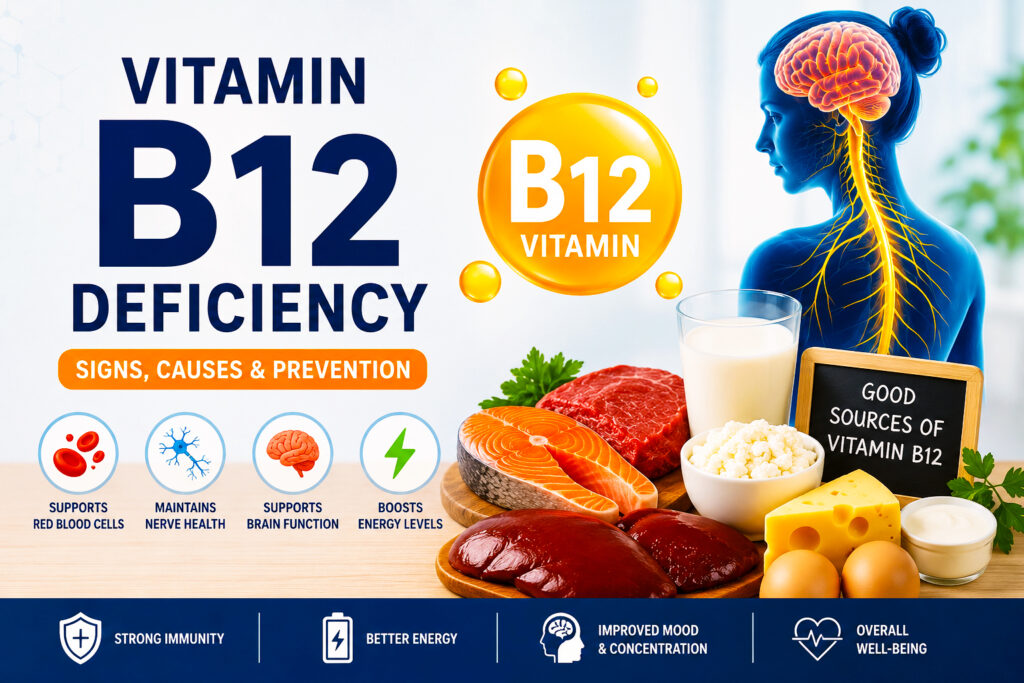
Vitamin B12, also known as cobalamin, is a water-soluble vitamin that helps your body produce red blood cells and maintain a healthy nervous system. It also supports DNA synthesis and energy metabolism.
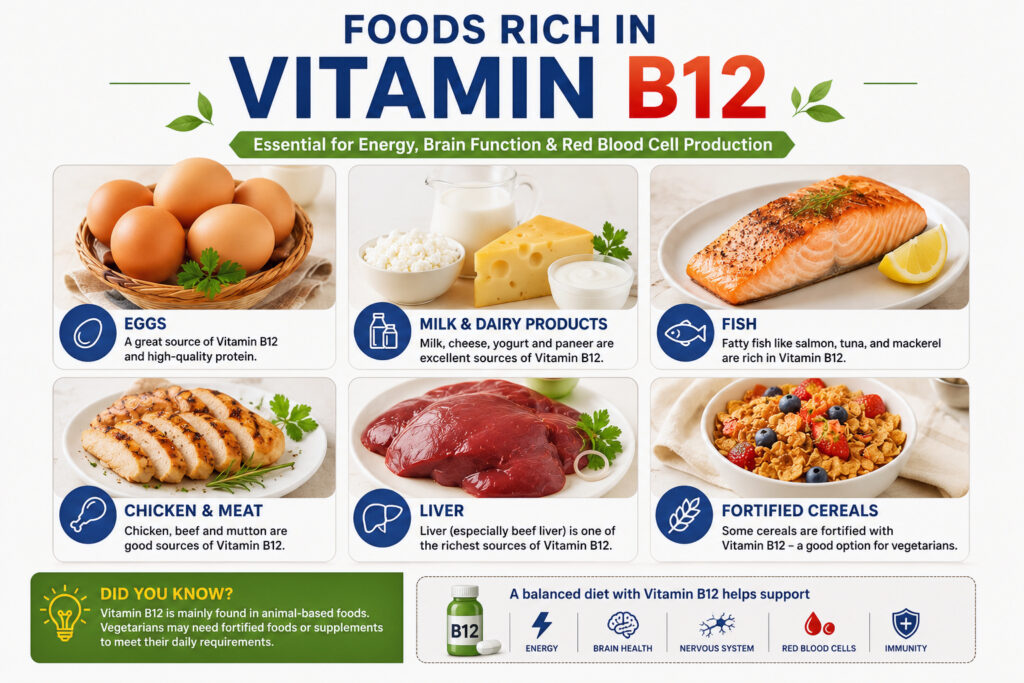
Vitamin B12 is naturally found in animal-based foods such as:
- Fish
- Eggs
- Dairy products
- Meat
- Poultry
People following vegetarian or vegan diets are at higher risk of Vitamin B12 deficiency because plant-based foods generally contain very little natural B12.
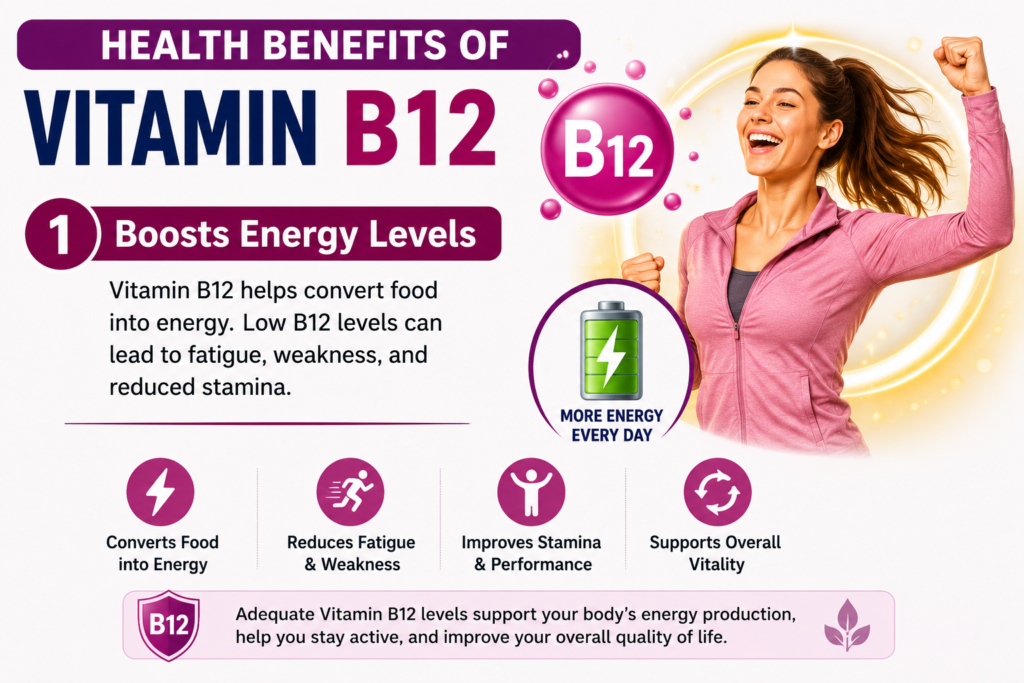
Health Benefits of Vitamin B121. Boosts Energy Levels
Vitamin B12 helps convert food into energy. Low B12 levels can lead to fatigue, weakness, and reduced stamina.
2. Supports Brain Function
B12 contributes to healthy nerve cells and cognitive performance. Adequate levels may help improve focus, memory, and mental clarity.
3. Helps Red Blood Cell Production
Vitamin B12 supports healthy blood formation and prevents megaloblastic anemia.
4. Supports Heart Health
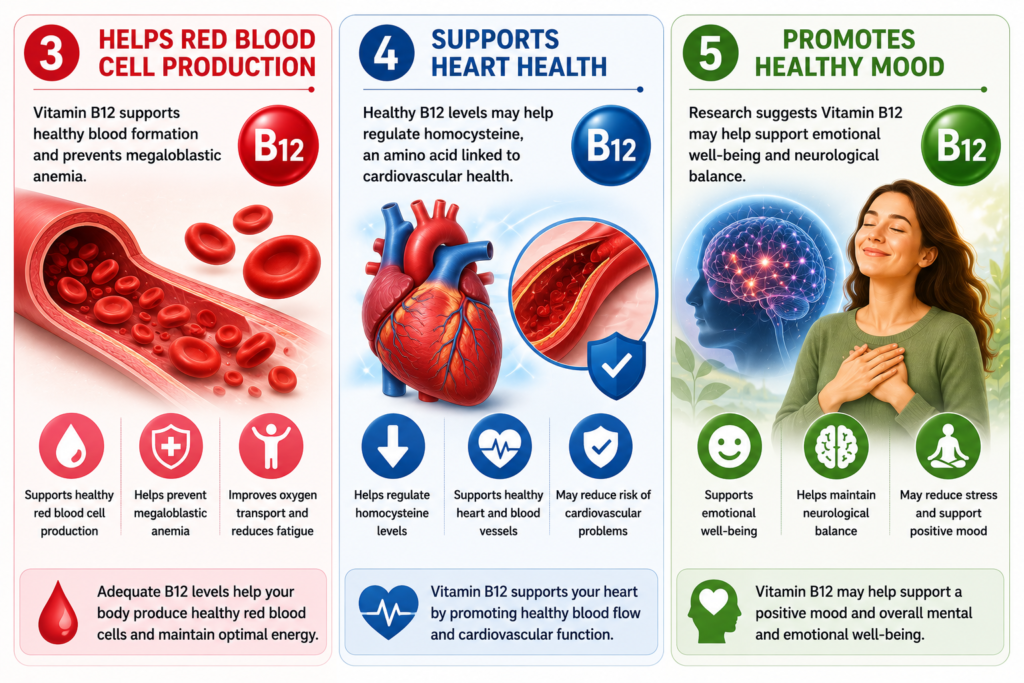
Healthy B12 levels may help regulate homocysteine, an amino acid linked to cardiovascular health.
5. Promotes Healthy Mood
Research suggests Vitamin B12 may help support emotional well-being and neurological balance.
What Is Vitamin D3?
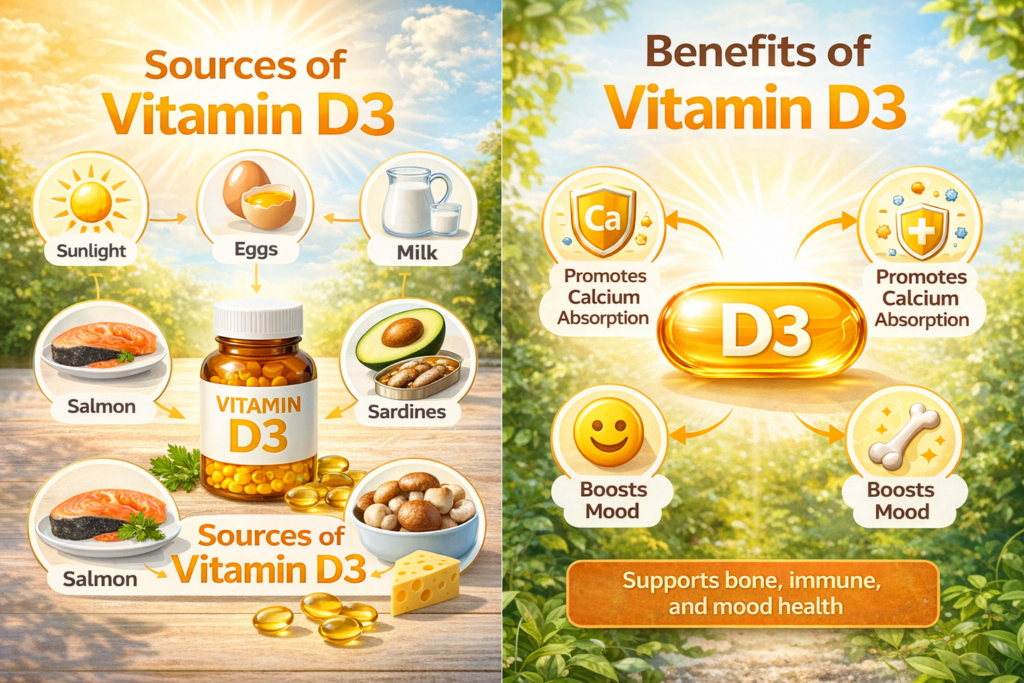
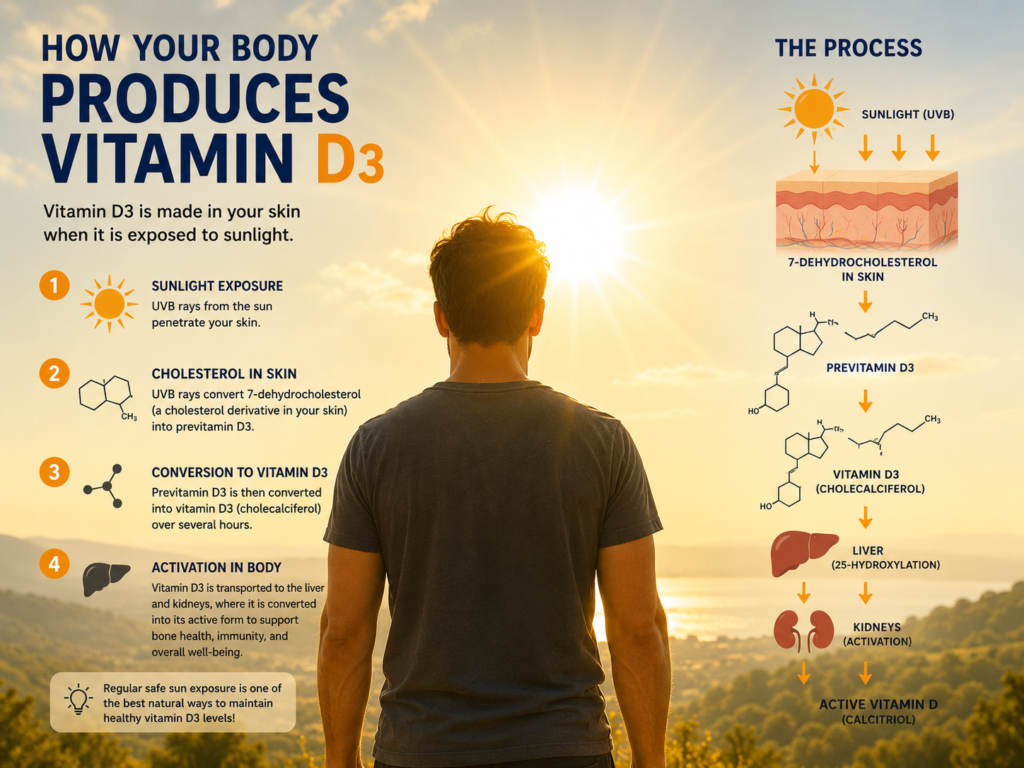
Vitamin D3, also called cholecalciferol, is often known as the “sunshine vitamin” because the body produces it after exposure to sunlight.
Vitamin D3 helps regulate calcium absorption and supports:
- Bone strength
- Muscle function
- Immune response
- Mood balance
Modern indoor lifestyles and limited sunlight exposure have made Vitamin D3 deficiency increasingly common across the world.
Health Benefits of Vitamin D3
1. Strengthens Bones and Teeth
Vitamin D3 helps the body absorb calcium effectively, reducing the risk of weak bones.
2. Supports Immune Function
D3 plays a major role in maintaining a healthy immune system.
3. Improves Muscle Health
Adequate Vitamin D3 levels contribute to muscle performance and mobility.
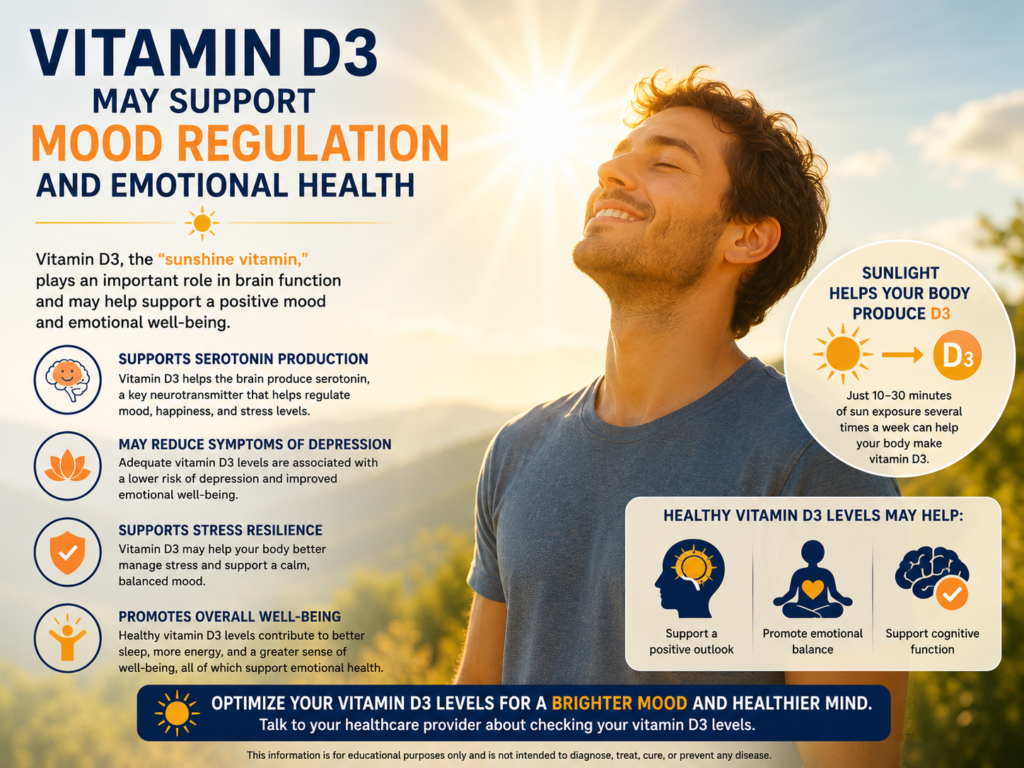
4. Supports Mental Wellness
Research indicates that Vitamin D3 may support mood regulation and emotional health.
5. Helps Overall Wellness
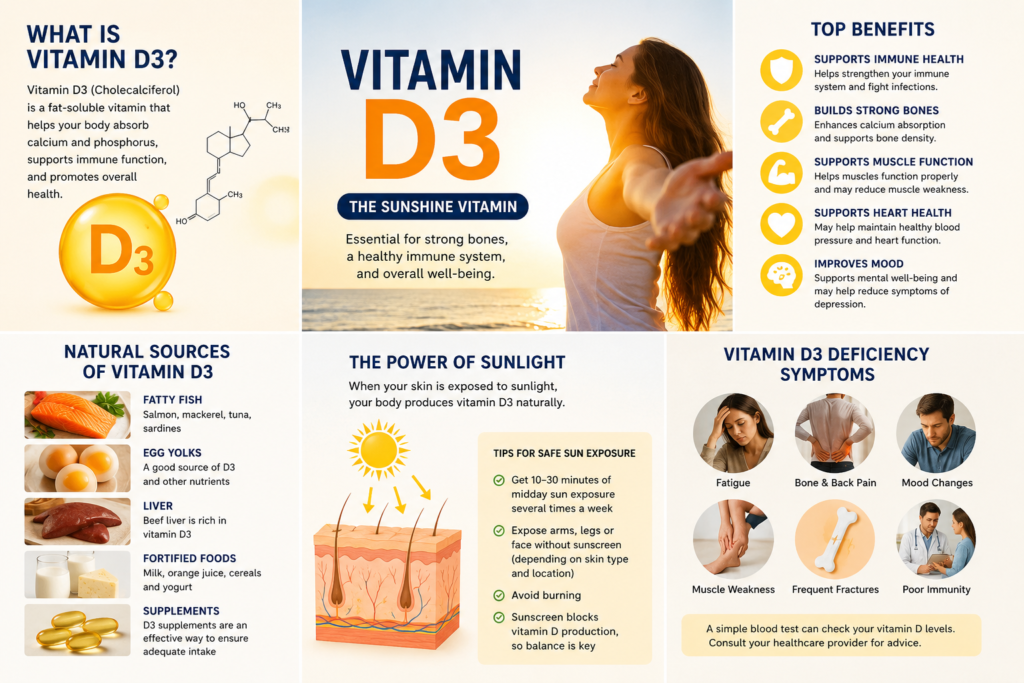
Vitamin D3 contributes to healthy aging and supports many important biological functions.
Signs of Vitamin B12 Deficiency
Common symptoms include:
- Extreme tiredness
- Weakness
- Tingling in hands and feet
- Poor memory
- Dizziness
- Shortness of breath
- Mood changes
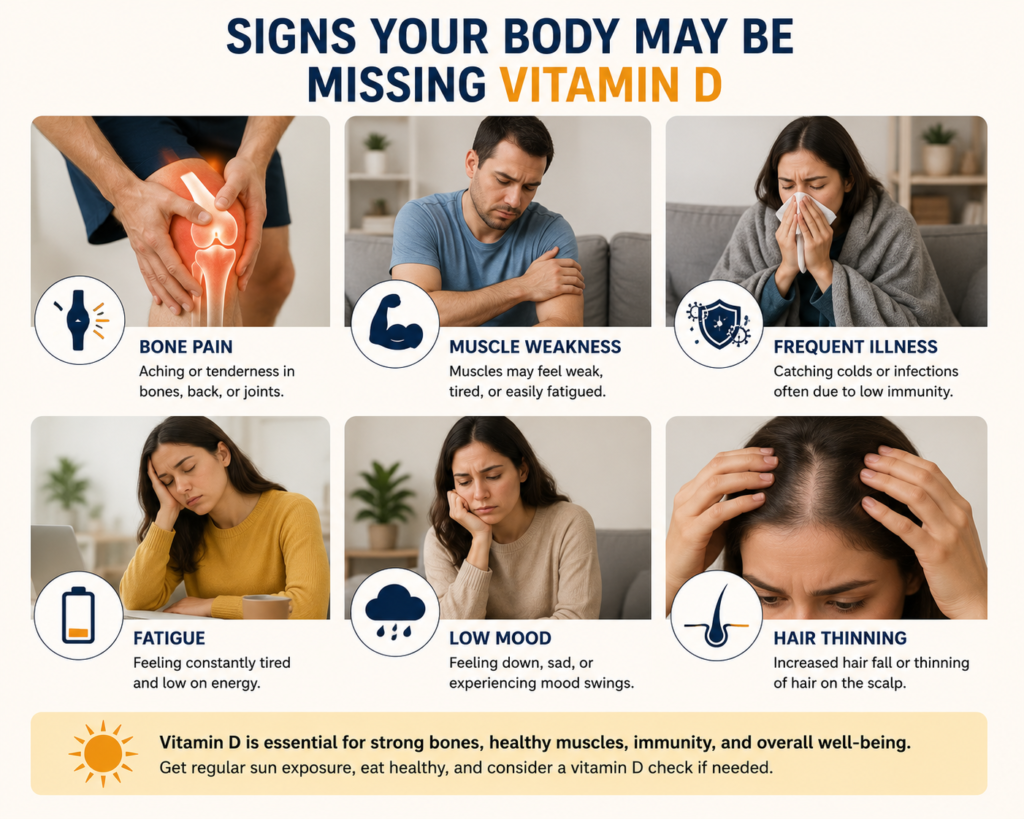
Signs of Vitamin D3 Deficiency
Common symptoms include:
- Bone pain
- Muscle weakness
- Frequent illness
- Fatigue
- Low mood
- Hair thinning
Best Food Sources of Vitamin B12
- Salmon
- Tuna
- Eggs
- Milk
- Yogurt
- Cheese
- Chicken
- Beef liver
Best Food Sources of Vitamin D3

- Fatty fish
- Egg yolks
- Fortified dairy products
- Mushrooms
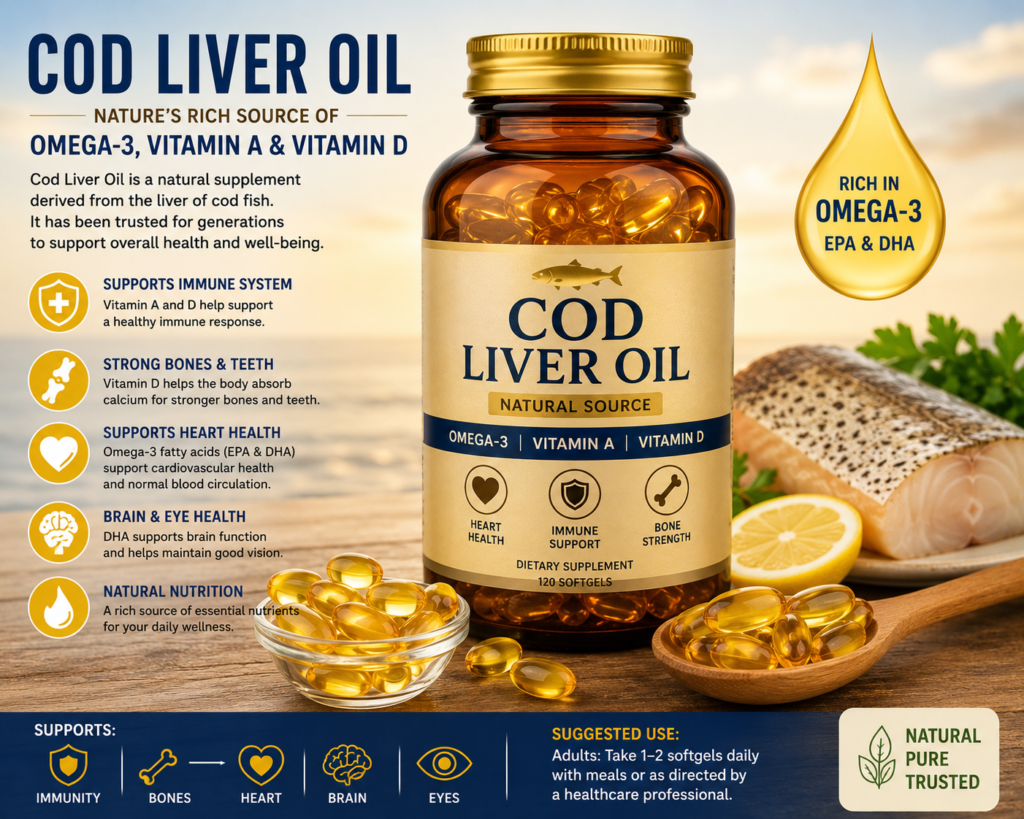
- Cod liver oil
Natural sunlight exposure is also one of the best ways to support healthy Vitamin D3 levels.
Daily Vitamin Requirements
Recommended intake varies depending on age, lifestyle, and health condition. Consulting a healthcare professional is always recommended before starting supplements.
Why Vitamin B12 and D3 Matter Together
Vitamin B12 and D3 work together to support:
- Higher energy levels
- Better immunity
- Healthy brain function
- Strong bones and muscles
- Improved wellness and vitality
These nutrients are especially important for:
- Vegetarians and vegans
- Older adults
- People with limited sunlight exposure
- Busy professionals
- Fitness enthusiasts
Final Thoughts
Vitamin B12 and Vitamin D3 are among the most important nutrients for maintaining a healthy and active lifestyle. As modern lifestyles continue to change, ensuring proper nutrition has become more essential than ever.
Whether through food, sunlight, or supplementation, maintaining healthy levels of B12 and D3 can support long-term wellness, stronger immunity, and better daily performance.
Investing in your health today can help build a healthier future tomorrow.
Related Posts
Stay Informed With the Latest & Most Important News
Previous Post
Next Post











Advertisement
