

Now Reading: Can an L4-L5 Disc Prolapse Regenerate? The Truth About Spine Regeneration and Modern Treatments
-
01
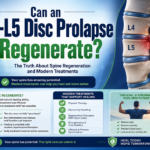
Can an L4-L5 Disc Prolapse Regenerate? The Truth About Spine Regeneration and Modern Treatments
Can an L4-L5 Disc Prolapse Regenerate? The Truth About Spine Regeneration and Modern Treatments

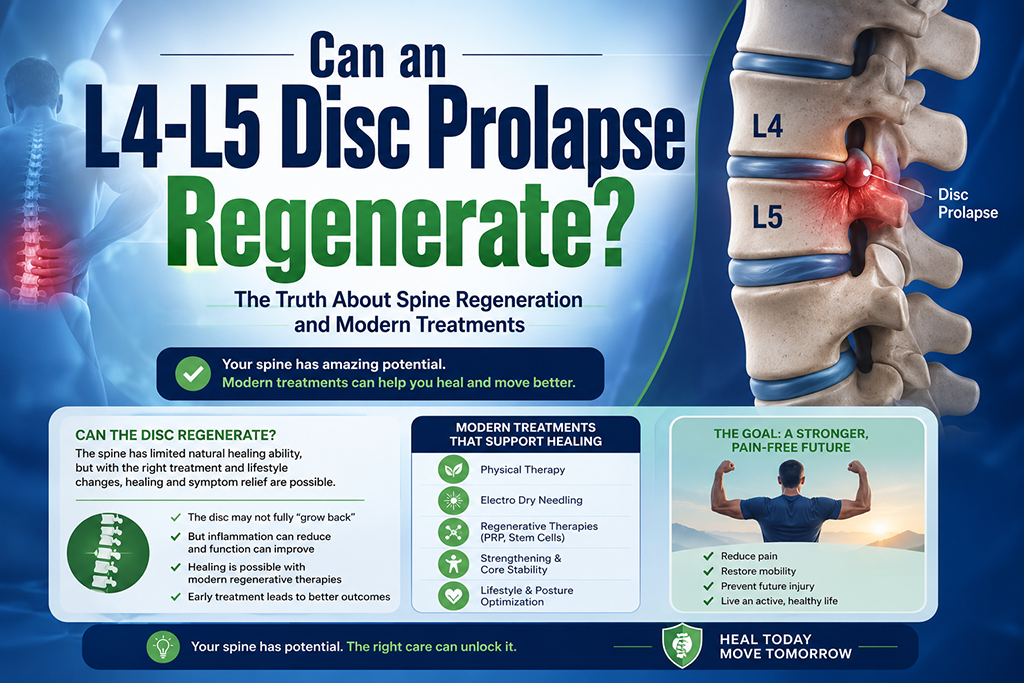
“Can a damaged L4-L5 disc (Spine Regeneration) really regenerate? Can stem cells, PRP, or regenerative medicine repair a slipped disc without surgery? If you’ve been diagnosed with an L4-L5 disc prolapse, this video will explain exactly what regeneration means, what modern science can actually achieve, and which treatments have the strongest evidence.
Stay until the end because we’ll also discuss exciting future technologies that may completely change how lumbar disc (Spine Regeneration) prolapse is treated.”
Understanding L4-L5 Disc Prolapse
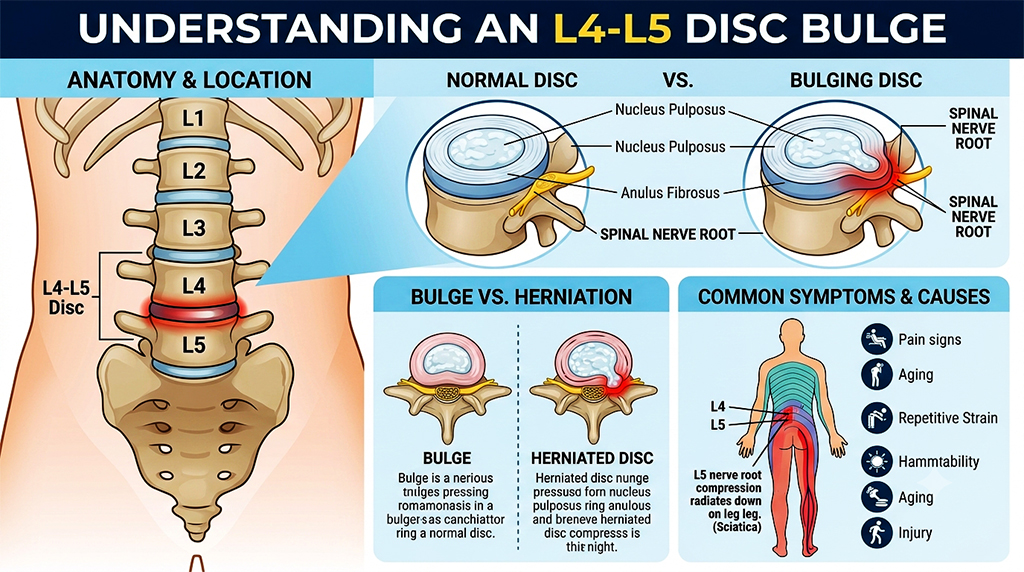
Visual: Spine anatomy animation.
The lumbar (Spine Regeneration) spine consists of five vertebrae:
- L1
- L2
- L3
- L4
- L5
Between each vertebra lies an intervertebral disc.
Each disc has two parts:
Nucleus Pulposus
A soft jelly-like center.
Functions:
- Shock absorber
- Maintains flexibility
- Distributes body weight evenly
Annulus Fibrosus
The tough outer ring made of collagen fibers.
Its purpose is to keep the nucleus inside.
What happens during an L4-L5 Disc Prolapse?
As people age—or due to injury—the annulus develops tiny tears.
Eventually:
- The nucleus pushes outward
- The disc bulges
- It compresses nearby nerves
Symptoms include:
- Low back pain
- Sciatica
- Tingling
- Numbness
- Muscle weakness
- Difficulty walking
What Does “Regeneration” Really Mean?
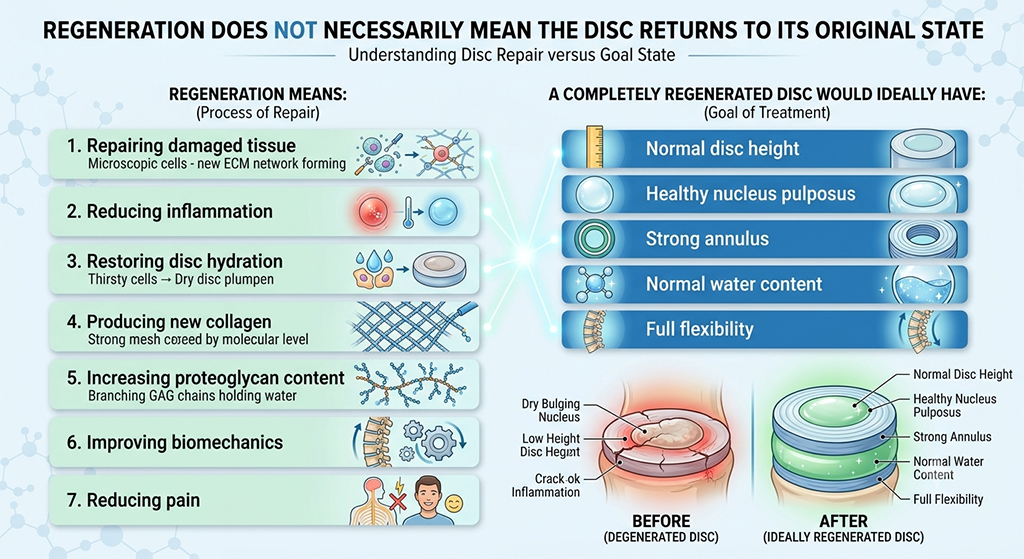
Many people misunderstand spine regeneration.
Regeneration does not necessarily mean the disc returns to its original state.
Instead, regeneration means:
- Repairing damaged tissue
- Reducing inflammation
- Restoring disc hydration
- Producing new collagen
- Increasing proteoglycan content
- Improving biomechanics
- Reducing pain
A completely regenerated disc (Spine Regeneration) would ideally have:
- Normal disc height
- Healthy nucleus pulposus
- Strong annulus
- Normal water content
- Full flexibility
Unfortunately, today’s treatments cannot reliably restore all of these features in humans. Current regenerative therapies show promise for pain relief and function, but consistent structural repair on MRI has not yet been proven in high-quality clinical studies.
Why Doesn’t the Disc (Spine Regeneration) Heal Easily?
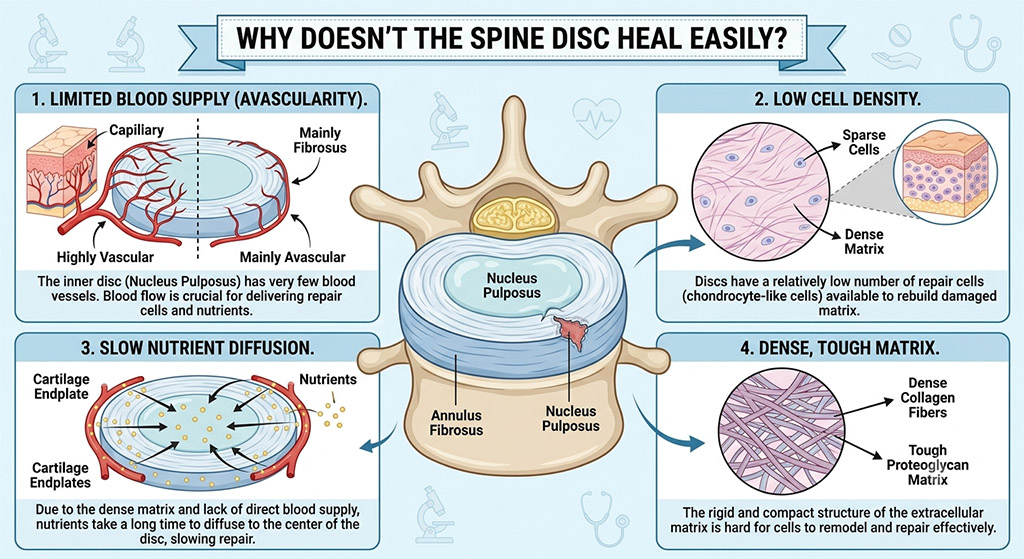
The spinal disc (Spine Regeneration) has almost no direct blood supply.
Instead, nutrients slowly diffuse through the vertebral endplates.
Because of this:
- Healing is slow
- Oxygen is limited
- Few repair cells reach the injury
- Waste products accumulate
This creates a poor environment for natural tissue (Spine Regeneration) repair, making true biological regeneration difficult.
Can the Body Heal a Disc (Spine Regeneration) Naturally?
Here is some encouraging news.
A herniated disc can sometimes shrink naturally through a process called spontaneous regression.
The body can:
- Recognize the herniated disc fragment as foreign tissue
- Recruit immune cells (especially macrophages)
- Break down and absorb the extruded material
- Reduce pressure on the nerve
Research shows spontaneous regression is much more likely with extruded or sequestered disc herniations than with simple bulges or protrusions.
Important: This is not the same as spine regenerating a brand-new disc. The protruding material may shrink and symptoms improve, but the original disc usually remains degenerated.
How Regenerative Medicine Tries to Help
1. Stem Cell Therapy
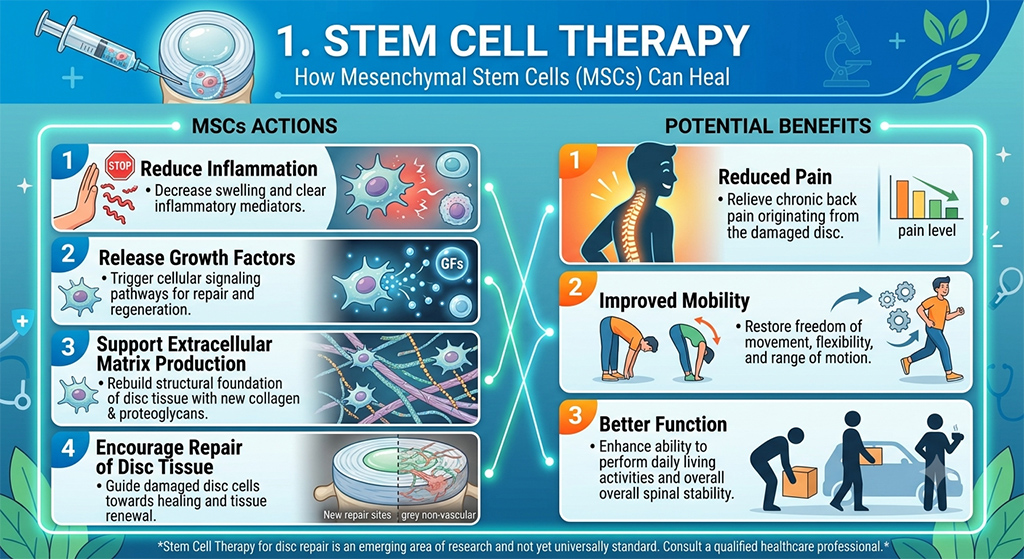
Mesenchymal stem cells may:
- Reduce inflammation
- Release growth factors
- Support extracellular matrix production
- Encourage repair of disc tissue
Potential benefits:
- Reduced pain
- Improved mobility
- Better function
Limitations:
- High-quality evidence is still limited.
- MRI proof of disc regeneration is inconsistent.
- Long-term effectiveness remains under investigation.
2. Platelet-Rich Plasma (PRP)
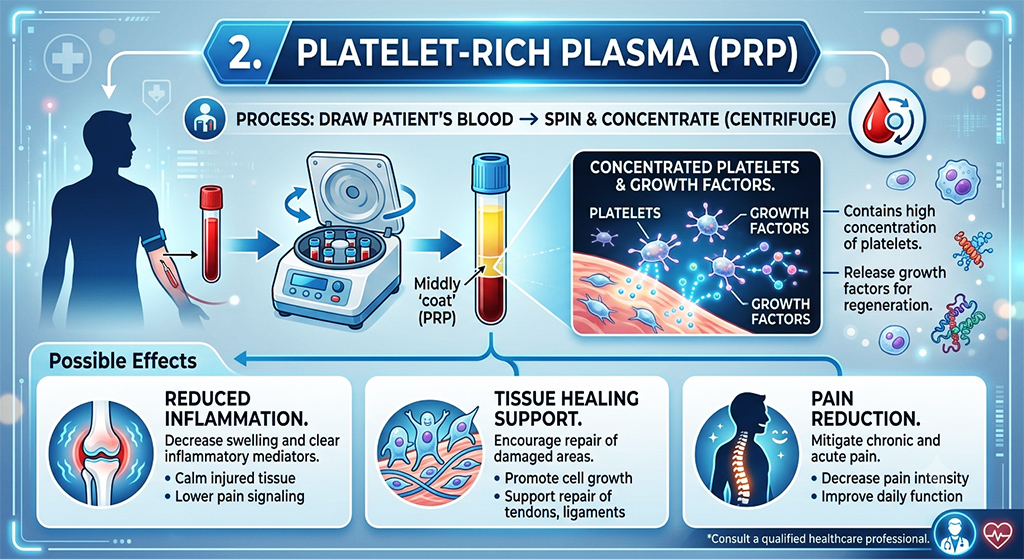
PRP is made from the patient’s own blood.
It contains concentrated platelets that release growth factors.
Possible effects include:
- Reduced inflammation
- Tissue healing support
- Pain reduction
Some studies suggest epidural PRP may provide longer-lasting pain and disability improvement than steroid injections in selected patients, although larger studies are still needed.
3. Growth Factors
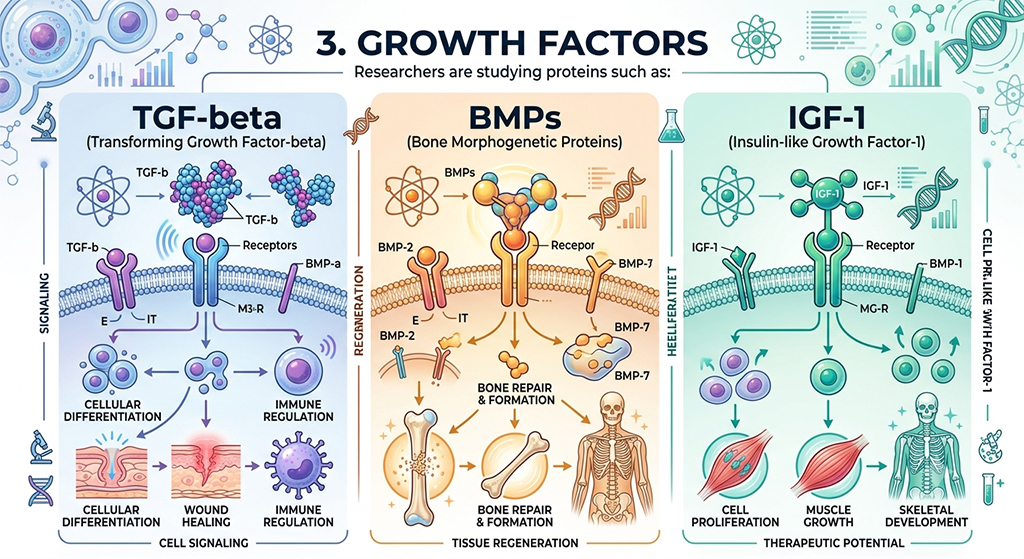
Researchers are studying proteins such as:
- TGF-beta
- BMPs
- IGF-1
These may stimulate disc cells to produce collagen and proteoglycans.
Most work remains experimental.
4. Biomaterial Scaffolds
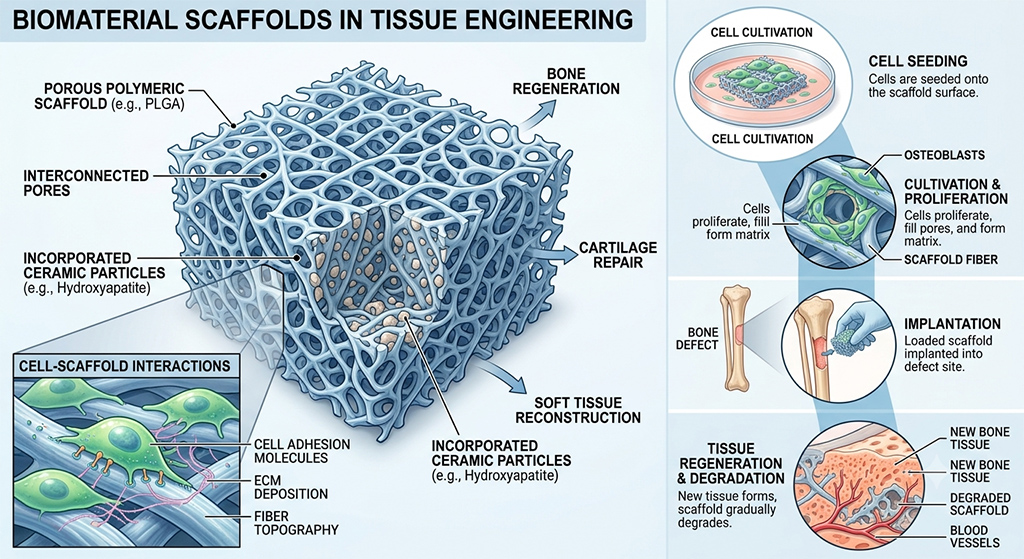
Scientists are developing:
- Hydrogels
- Collagen scaffolds
- Injectable biomaterials
Their goals include:
- Supporting new tissue growth
- Restoring disc height
- Delivering regenerative cells more effectively
These technologies are still largely in the research phase.
What Does Current Research Show?
Clinical studies generally show:
Pain
✔ Often improves
Function
✔ Frequently improves
Mobility
✔ Can improve
MRI appearance
✖ Major structural regeneration is not consistently demonstrated
Researchers continue to investigate:
- Stem cells
- Exosomes
- Gene therapy
- Tissue engineering
- Biomaterials
- Artificial nucleus replacement
These approaches are promising but are not yet established standard care.
Who May Benefit From Regenerative Treatments?
Potential candidates may include people with:
- Mild to moderate disc degeneration
- Persistent back pain despite conservative treatment
- No severe spinal instability
- No major neurological deficits
- No emergency conditions such as cauda equina syndrome
A spine specialist should determine whether regenerative therapy, conservative management, or surgery is the most appropriate option.
When Surgery Is Necessary
Although many patients improve without surgery, urgent surgical evaluation may be needed if there is:
- Progressive leg weakness
- Loss of bladder or bowel control
- Saddle numbness
- Severe nerve compression that does not respond to conservative treatment
In these situations, delaying treatment can risk permanent nerve damage.
Conclusion
Regeneration of an L4-L5 disc is one of the most exciting areas in modern spine medicine. Today, regenerative treatments such as stem cells and PRP may help reduce pain and improve function for some patients, but they cannot yet reliably restore a severely damaged disc to its original healthy state. Many herniated discs also improve naturally as the body gradually resorbs the protruding material, even though the underlying disc degeneration often remains.
The future of disc regeneration is likely to involve combinations of stem cells, biomaterials, exosome therapy, and gene-based treatments, but these approaches are still being refined through clinical research.
Related Posts
Stay Informed With the Latest & Most Important News
Previous Post
Next Post






Advertisement

-
 01Boost your gut health and immune system naturally
 -
 02Extraordinary Lasoda Glue Berry: Health Benefits, Nutrition, and Traditional Uses
 -
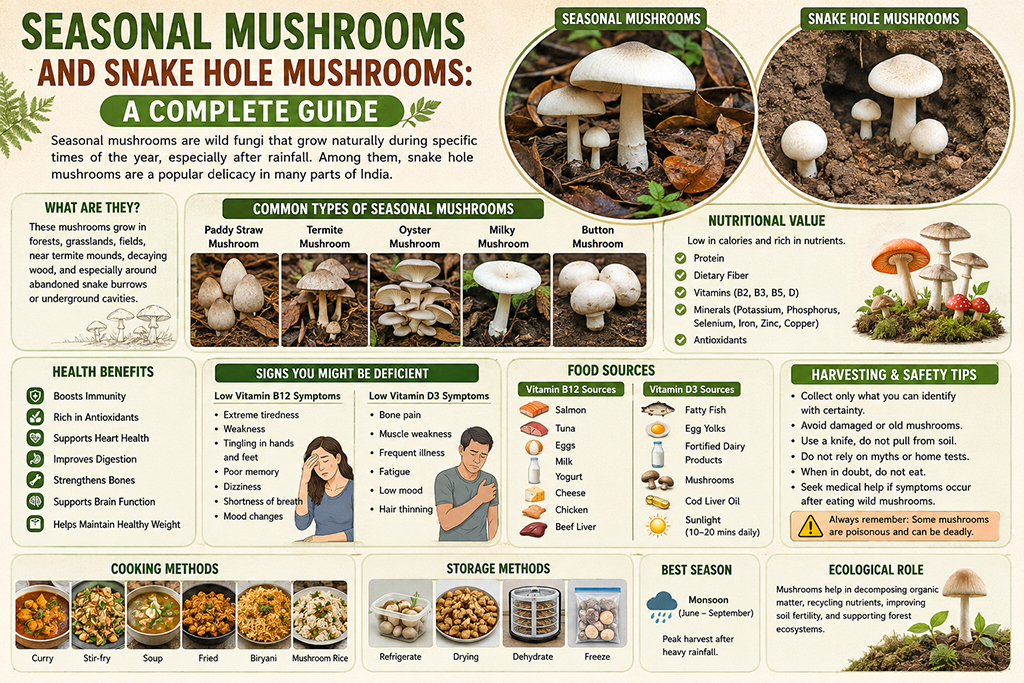
 03Seasonal mushrooms and snake hole mushrooms: A complete guide
 -
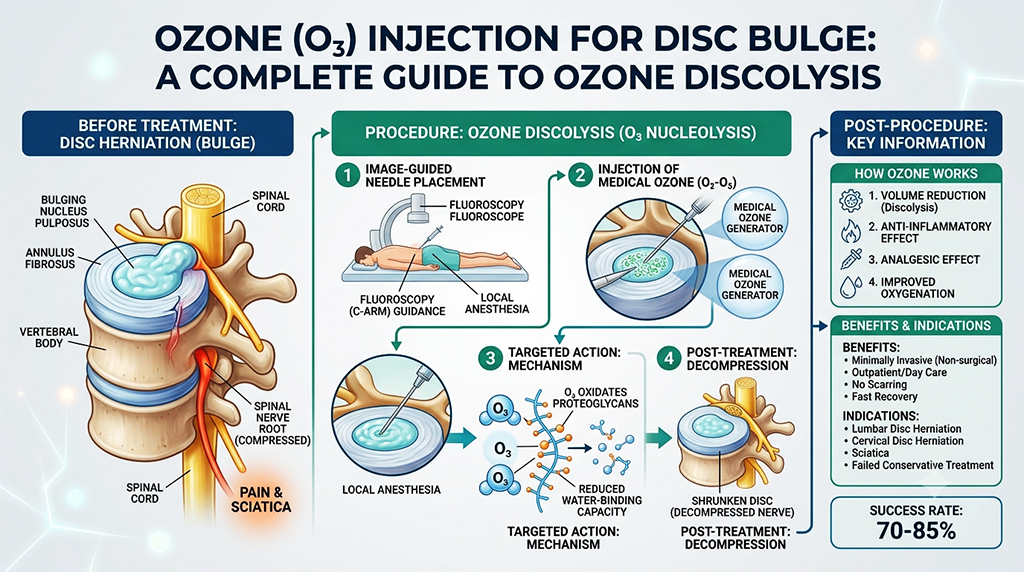
 04Ozone (O₃) Injection for Disc Bulge: A Complete Guide to Ozone Discolysis
 -
 05Regenerative Stem Cell Treatments in Orthopedics: A Complete Guide to Healing Joints, Bones, and Soft Tissues Naturally
 -
 06Can an L4-L5 Disc Prolapse Regenerate? The Truth About Spine Regeneration and Modern Treatments
 -
 07Electro Dry Needling for L4-L5 Disc Bulge: A Comprehensive Guide