

Now Reading: Electro Dry Needling for L4-L5 Disc Bulge: A Comprehensive Guide
-
01
Electro Dry Needling for L4-L5 Disc Bulge: A Comprehensive Guide

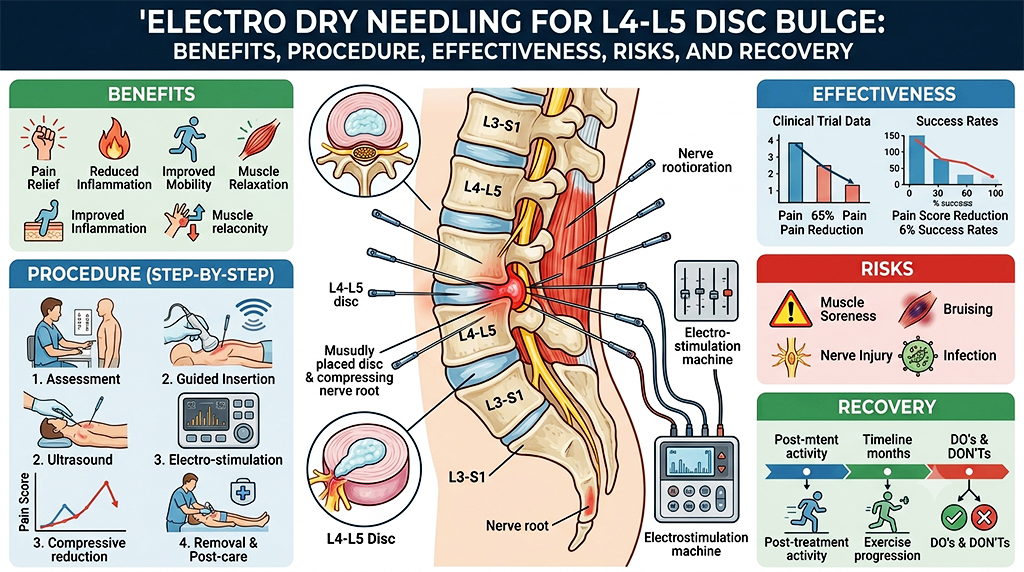
Lower back pain caused by an Electro Dry Needling for L4-L5 Disc Bulge is one of the most common spinal conditions affecting adults. It can lead to persistent lower back pain, muscle spasms, stiffness, and sciatica, significantly impacting daily activities and quality of life. While treatments such as medications, physiotherapy, epidural steroid injections, and surgery are well known, Electro Dry Needling (EDN) has emerged as an adjunct therapy that may help reduce pain and improve muscle function in selected patients.
It is important to understand that Electro Dry Needling does not repair or shrink the bulging disc itself. Instead, it targets painful muscles, trigger points, and abnormal muscle tension that often develop around the injured spinal segment.
This article explains what Electro Dry Needling is, how it works, its potential benefits, limitations, scientific evidence, risks, and whether it is appropriate for people with an L4-L5 disc bulge.
Understanding Electro Dry Needling
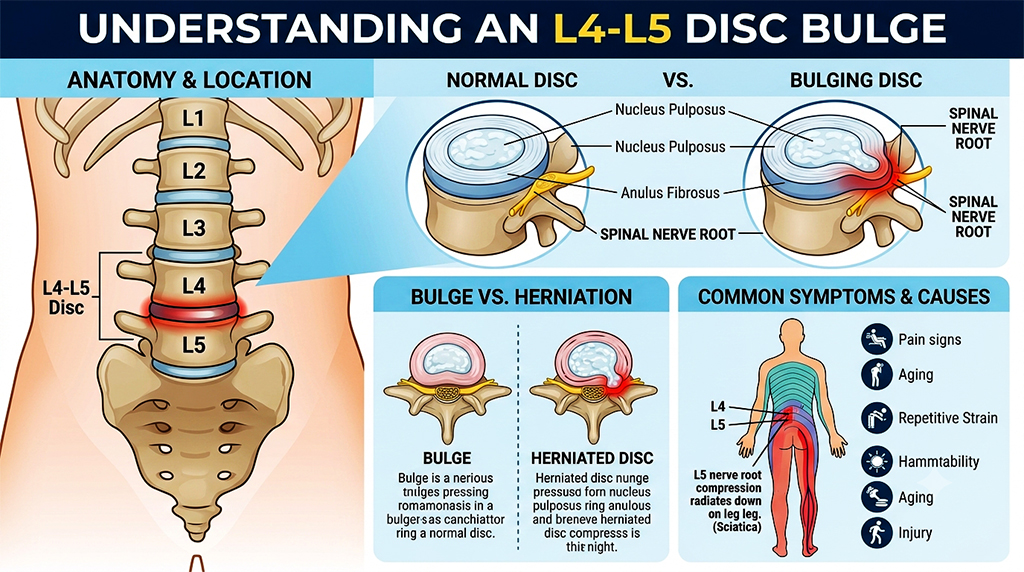
The lumbar spine consists of five vertebrae, with the L4-L5 level being one of the most mobile and heavily loaded segments. This makes it particularly susceptible to degeneration and injury.
A spinal disc consists of:
- Nucleus Pulposus: Soft, gel-like center that absorbs shock.
- Annulus Fibrosus: Tough outer ring made of collagen fibers.
When the annulus weakens or tears, the nucleus may bulge outward. This can compress nearby nerve roots and produce symptoms such as:
- Lower back pain
- Sciatica
- Leg pain
- Numbness
- Tingling
- Muscle weakness
- Difficulty standing or walking
In addition to nerve irritation, the surrounding muscles often become tight and painful as they attempt to protect the injured spine. These muscle changes are one of the main targets of Electro Dry Needling.
What Is Electro Dry Needling?
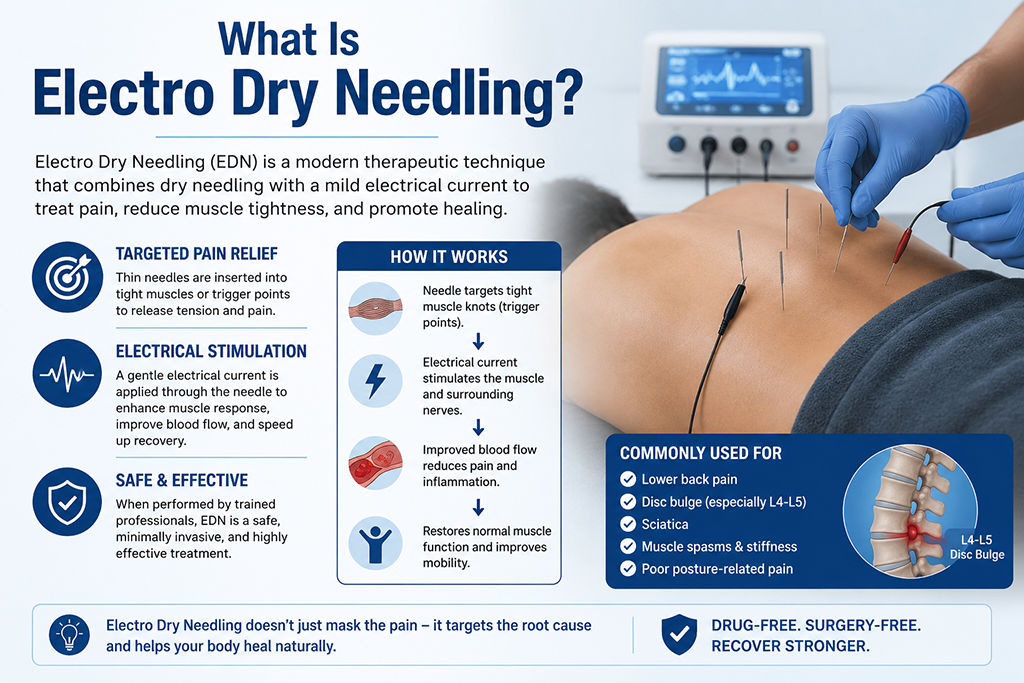
Electro Dry Needling combines two therapeutic techniques:
Fine sterile needles are inserted into painful muscles or trigger points. Small electrical currents are then delivered through the needles using a specialized electrotherapy device.
Unlike acupuncture, Electro Dry Needling is based on modern anatomy and neurophysiology. The treatment aims to improve muscle function, reduce pain, and decrease muscle spasm rather than restore the flow of traditional energy pathways.
How Electro Dry Needling Works
Electro Dry Needling acts on several biological mechanisms.
1. Releases Muscle Trigger Points
A trigger point is a tight band of muscle fibers that can cause local or referred pain.
Electrical stimulation helps:
- Relax contracted muscle fibers
- Improve blood circulation
- Reduce muscle stiffness
- Restore normal muscle activity
2. Reduces Pain Signals
The electrical impulses stimulate sensory nerves, which can reduce pain through mechanisms including the “gate control” theory of pain and activation of the body’s natural pain-inhibiting pathways.
The treatment also promotes the release of natural pain-relieving chemicals such as:
- Endorphins
- Enkephalins
- Serotonin
These substances help decrease pain perception.
3. Improves Blood Flow
Chronic muscle tension decreases circulation.
Improved circulation provides:
- Oxygen
- Nutrients
- Removal of metabolic waste products
This may support healing of the affected muscles.
4. Reduces Protective Muscle Spasm
Many patients with an L4-L5 disc bulge develop chronic muscle guarding.
Electro Dry Needling can:
- Reduce muscle guarding
- Improve flexibility
- Increase spinal mobility
- Make rehabilitation exercises easier to perform
5. Enhances Neuromuscular Function
Electrical stimulation may improve communication between nerves and muscles, helping to normalize muscle activation patterns and reduce abnormal movement.
Does Electro Dry Needling Heal the Disc?
This is one of the most common misconceptions.
The answer is no.
Electro Dry Needling:
✔ Reduces muscle pain
✔ Decreases muscle spasm
✔ Improves mobility
✔ Supports rehabilitation
✔ Helps some patients participate more effectively in exercise therapy
However, it does not:
- Repair the torn annulus
- Restore disc height
- Regenerate disc tissue
- Reverse disc degeneration
- Remove nerve compression
Its primary role is symptom management and improving function.
Treatment Procedure
A typical session involves:
Step 1: Clinical Assessment
The therapist evaluates:
- Pain location
- Muscle tightness
- Trigger points
- Nerve symptoms
- Movement limitations
Step 2: Needle Placement
Thin sterile needles are inserted into muscles such as:
- Multifidus
- Quadratus lumborum
- Gluteus medius
- Piriformis
- Erector spinae
- Gluteus maximus
Needles are placed based on the patient’s examination findings, not directly into the spinal disc.
Step 3: Electrical Stimulation
Electrodes connect pairs of needles.
A gentle electrical current is applied for approximately 10–20 minutes.
The patient usually feels:
- Mild tingling
- Gentle muscle contractions
- Rhythmic pulsing
The treatment should not be excessively painful.
Step 4: Post-Treatment Exercise
Many clinicians recommend:
- Stretching
- Core strengthening
- Walking
- Lumbar stabilization exercises
Exercise helps maintain the improvements achieved during the session.
Benefits of Electro Dry Needling
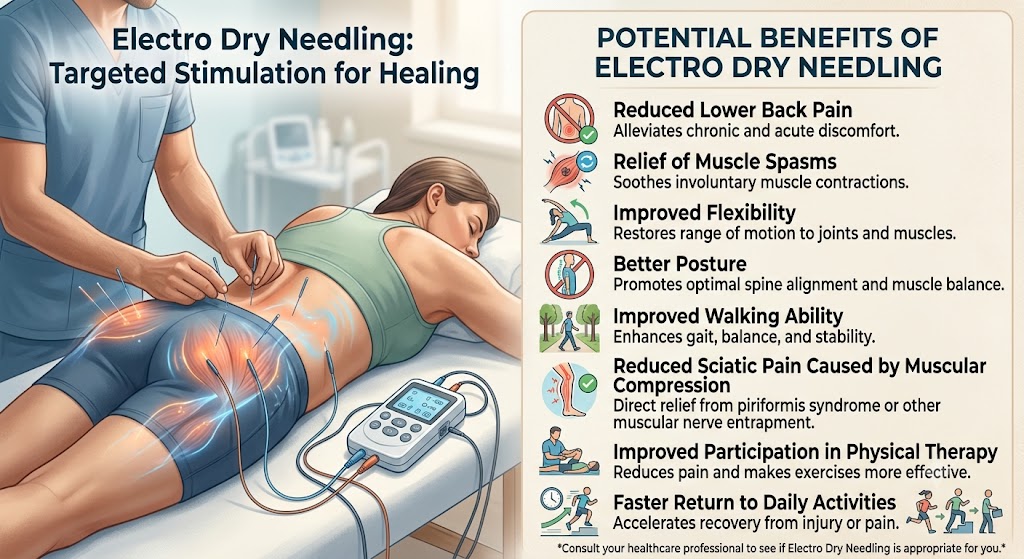
Potential benefits include:
- Reduced lower back pain
- Relief of muscle spasms
- Improved flexibility
- Better posture
- Improved walking ability
- Reduced sciatic pain caused by muscular compression
- Improved participation in physical therapy
- Faster return to daily activities
Patients often notice improvement after several sessions, although responses vary.
Scientific Evidence
Research suggests that dry needling can reduce pain and improve short-term function in people with chronic low back pain, particularly when combined with exercise and rehabilitation.
However, current evidence also indicates:
- Benefits are generally short- to medium-term.
- Electro Dry Needling is not a cure for disc pathology.
- It should be considered part of a comprehensive treatment plan rather than a standalone therapy.
- More high-quality studies are needed specifically in patients with lumbar disc bulges.
Who May Benefit?
Electro Dry Needling may be suitable for patients with:
- L4-L5 disc bulge
- Chronic low back pain
- Muscle trigger points
- Persistent muscle spasm
- Mechanical low back pain
- Myofascial pain syndrome associated with disc injury
- Pain limiting participation in rehabilitation
Who Should Avoid Electro Dry Needling?
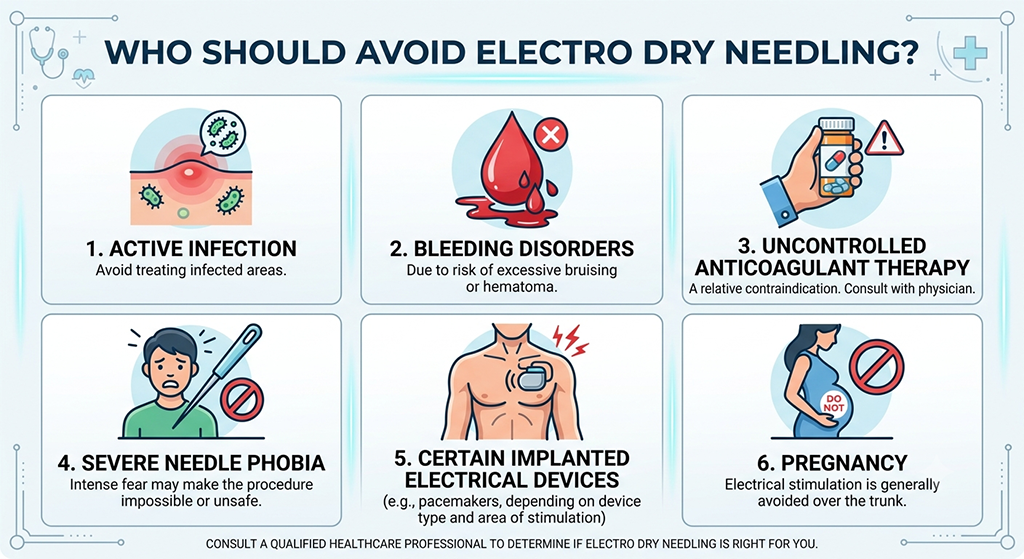
It may not be appropriate for people with:
- Active infection
- Bleeding disorders
- Uncontrolled anticoagulant therapy (relative contraindication)
- Severe needle phobia
- Certain implanted electrical devices (such as some pacemakers, depending on the stimulation area and device)
- Pregnancy (electrical stimulation is generally avoided over the trunk)
Treatment should only be provided after appropriate medical assessment.
Possible Side Effects
Most side effects are mild and temporary.
These include:
- Mild soreness
- Bruising
- Temporary fatigue
- Minor bleeding at needle sites
- Muscle twitching
Rare complications include:
- Infection (if sterile technique is not followed)
- Nerve irritation
- Vasovagal reactions (fainting)
Choosing a qualified healthcare professional reduces these risks.
Recovery After Treatment
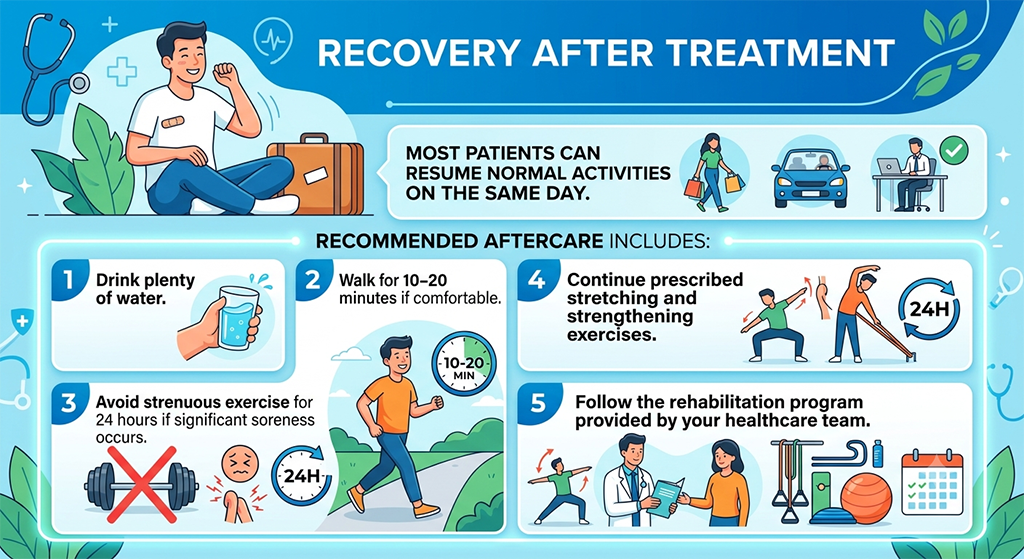
Most patients can resume normal activities on the same day.
Recommended aftercare includes:
- Drink plenty of water.
- Walk for 10–20 minutes if comfortable.
- Avoid strenuous exercise for 24 hours if significant soreness occurs.
- Continue prescribed stretching and strengthening exercises.
- Follow the rehabilitation program provided by your healthcare team.
Electro Dry Needling vs. Standard Dry Needling
| Feature | Dry Needling | Electro Dry Needling |
|---|---|---|
| Needle insertion | Yes | Yes |
| Electrical stimulation | No | Yes |
| Muscle activation | Manual | Electrical |
| Session duration | 10–20 minutes | 15–30 minutes |
| Pain modulation | Good | May provide greater stimulation in some patients |
| Goal | Trigger point release | Trigger point release plus neuromuscular stimulation |
Electro Dry Needling vs. PRP vs. Stem Cell Therapy
| Treatment | Main Target | Repairs Disc? | Primary Goal |
|---|---|---|---|
| Electro Dry Needling | Muscles and trigger points | No | Reduce pain and muscle spasm |
| PRP | Inflamed tissues | Not proven | Reduce inflammation and support healing |
| Stem Cell Therapy | Degenerated disc tissue | Experimental | Potential biological repair |
| Surgery | Herniated disc/nerve compression | Removes compression | Relieve severe nerve compression |
Integrating Electro Dry Needling Into a Comprehensive Treatment Plan
For most patients, Electro Dry Needling works best when combined with:
- Education about back pain
- Activity modification
- Weight management (if needed)
- Core strengthening exercises
- Physiotherapy
- Flexibility training
- Proper lifting techniques
- Good posture and ergonomics
- Medical management as recommended by a physician
Frequently Asked Questions (FAQs)
Is Electro Dry Needling painful?
Most people experience only mild discomfort, tingling, or a brief muscle twitch during treatment.
How many sessions are needed?
Many treatment plans involve 4–8 sessions, but the exact number depends on symptoms and clinical response.
Can it replace surgery?
No. If there is severe nerve compression, progressive weakness, or loss of bladder or bowel control, surgery may be necessary.
Can it cure an L4-L5 disc bulge?
No. It helps manage pain and muscle dysfunction but does not reverse the structural disc bulge.
Can I combine it with physiotherapy?
Yes. In fact, combining Electro Dry Needling with a structured rehabilitation program often provides better outcomes than either approach alone.
Conclusion
Electro Dry Needling is a valuable adjunctive therapy for people with an L4-L5 disc bulge, particularly when muscle spasm, trigger points, and chronic pain contribute to disability. By reducing muscle tension, improving blood flow, and modulating pain, it can help many patients move more comfortably and participate in rehabilitation.
However, it is important to have realistic expectations. Electro Dry Needling does not regenerate the intervertebral disc or correct the structural bulge. The strongest evidence supports its use as part of a broader treatment strategy that includes exercise, physiotherapy, education, and appropriate medical care. If symptoms are severe or neurological deficits are progressing, prompt evaluation by a spine specialist is essential to determine whether more advanced interventions are required.
Related Posts

Stay Informed With the Latest & Most Important News
Previous Post
Next Post







Advertisement

-
 01Boost your gut health and immune system naturally
 -
 02Extraordinary Lasoda Glue Berry: Health Benefits, Nutrition, and Traditional Uses
 -
 03Seasonal mushrooms and snake hole mushrooms: A complete guide
 -
 04Ozone (O₃) Injection for Disc Bulge: A Complete Guide to Ozone Discolysis
 -
 05Regenerative Stem Cell Treatments in Orthopedics: A Complete Guide to Healing Joints, Bones, and Soft Tissues Naturally
 -
 06Can an L4-L5 Disc Prolapse Regenerate? The Truth About Spine Regeneration and Modern Treatments
 -
 07Electro Dry Needling for L4-L5 Disc Bulge: A Comprehensive Guide