Now Reading: Millet Umbali: Nutrition, Health Benefits, Preparation and Precautions
-
01
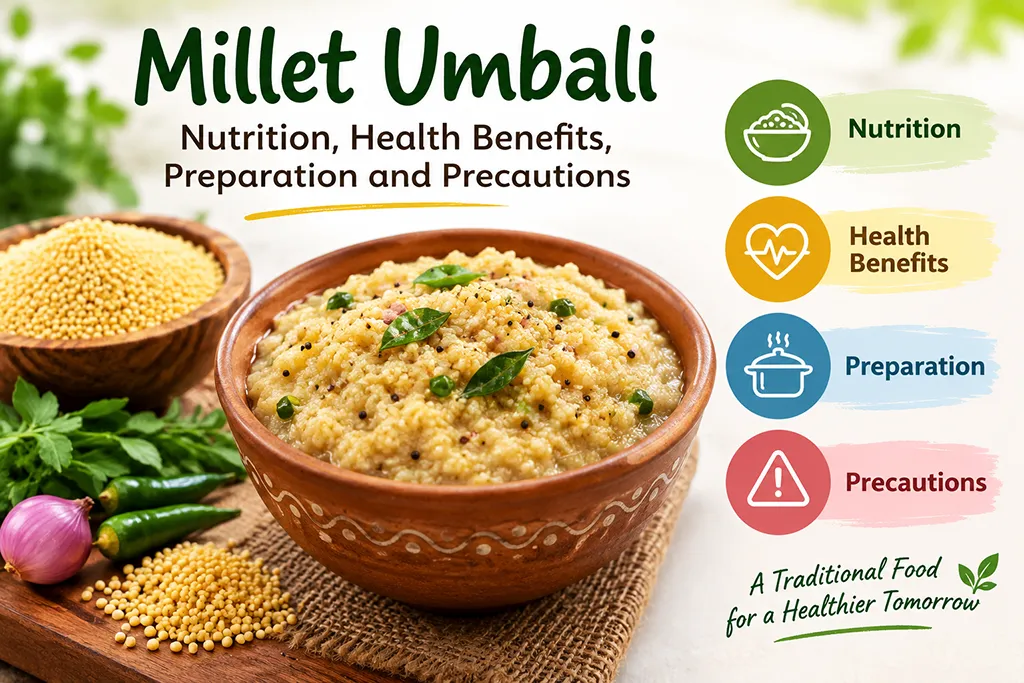
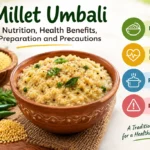
Millet Umbali: Nutrition, Health Benefits, Preparation and Precautions
Millet Umbali: Nutrition, Health Benefits, Preparation and Precautions



5
What Is Millet Umbali?
Millet Umbali is a traditional preparation made primarily from millet flour and water. Depending on the region and recipe, different millets such as ragi (finger millet), jowar (sorghum), bajra (pearl millet), foxtail millet or other locally available millets may be used.
The mixture is cooked until it becomes thick and is then shaped or served as a soft, dense preparation. It is traditionally eaten with vegetable curries, dal, sambar, leafy greens, chutneys or other side dishes.
Millet-based traditional foods are increasingly gaining attention because millets provide complex carbohydrates, dietary fibre, minerals and various plant compounds.
Nutritional Value of Millet Umbali
The exact nutritional composition depends on the millet used, preparation method and serving size.
Major nutrients include:
- Complex carbohydrates – provide energy
- Dietary fibre – supports digestive health and satiety
- Protein – contributes to muscle maintenance and tissue repair
- Iron – important for haemoglobin formation
- Magnesium – supports muscle and nerve function
- Phosphorus – important for bones and energy metabolism
- Potassium – contributes to normal muscle and nerve function
- Zinc – supports immune function and metabolism
- B vitamins – involved in energy metabolism
- Polyphenols and other plant compounds – provide antioxidant activity
The nutrient profile varies considerably between millet varieties.
Potential Health Benefits of Millet Umbali
1. Supports Digestive Health
Millets can provide dietary fibre, which helps promote normal bowel function and supports a healthy gut environment.
Adequate fibre intake may also contribute to better satiety and overall dietary quality.
2. May Help With Blood-Sugar Management
Millets generally contain more fibre and nutrients than highly refined cereal products. Some millet-based meals may produce a slower rise in blood glucose than refined grain foods.
However, Millet Umbali is still a carbohydrate-containing food, so portion size and the accompanying foods are important, particularly for people with diabetes.
A preparation made with whole millet and eaten with vegetables, pulses and protein is generally more nutritionally balanced than one eaten with large quantities of sugary or refined foods.
3. Supports Heart Health
Millets can contribute fibre, magnesium, potassium and unsaturated fats when consumed as part of a balanced diet.
Replacing some refined grains with whole or minimally processed millet foods may help improve overall dietary quality.
4. Provides Energy
The carbohydrates in millet provide energy for everyday activities and physical exercise.
For people who are physically active, combining Millet Umbali with a protein-rich food such as dal, eggs, curd, fish or lean meat can create a more balanced meal.
5. Supports Bone Health
Certain millets, particularly ragi, are notable for their calcium content.
Calcium, vitamin D, phosphorus, magnesium and adequate protein all contribute to maintaining healthy bones. Millet alone, however, does not provide all the nutrients required for optimal bone health.
6. Provides Plant-Based Minerals
Millets contain minerals such as iron, magnesium, phosphorus and zinc.
However, the body does not necessarily absorb all the minerals present in millet because millets also contain compounds such as phytates, which can reduce mineral bioavailability.
Traditional processing methods such as soaking, fermentation and germination can sometimes improve mineral availability.
Millet Umbali and Weight Management
Millet Umbali can be incorporated into a weight-management diet because millet can provide fibre and relatively good satiety.
However, simply replacing rice with millet does not automatically cause weight loss.
Weight management depends on:
- Total calorie intake
- Portion size
- Physical activity
- Protein intake
- Fibre intake
- Sleep and lifestyle
- Overall dietary pattern
A large serving of millet prepared with calorie-dense ingredients can still contribute substantial calories.
Millet Umbali for Sports and Fitness
For physically active individuals, Millet Umbali can be used as a carbohydrate-rich meal.
Before exercise
A moderate portion may provide carbohydrates that can contribute to energy availability.
After exercise
Pair it with a protein source such as:
- Dal
- Eggs
- Curd
- Paneer
- Fish
- Chicken
- Soy or other legumes
This creates a more complete recovery meal.
For athletes, vitamin B12 and vitamin D3 should not be assumed to come from millet. Millet contains some B vitamins, but it is not a reliable natural source of vitamin B12, while vitamin D3 is generally not present in meaningful amounts.
Which Millet Is Best for Umbali?
Different millets offer different nutritional profiles.
| Millet | Notable nutritional characteristics |
|---|---|
| Ragi (finger millet) | Particularly rich in calcium |
| Pearl millet (bajra) | Provides iron, magnesium, fibre and energy |
| Sorghum (jowar) | Provides fibre, minerals and plant compounds |
| Foxtail millet | Provides fibre, protein and minerals |
| Little millet | Provides fibre and several minerals |
| Kodo millet | Contains fibre and various micronutrients |
| Barnyard millet | Provides fibre and minerals and is commonly used in traditional diets |
There is no single “best” millet. Variety is preferable because different millets provide different nutrients.
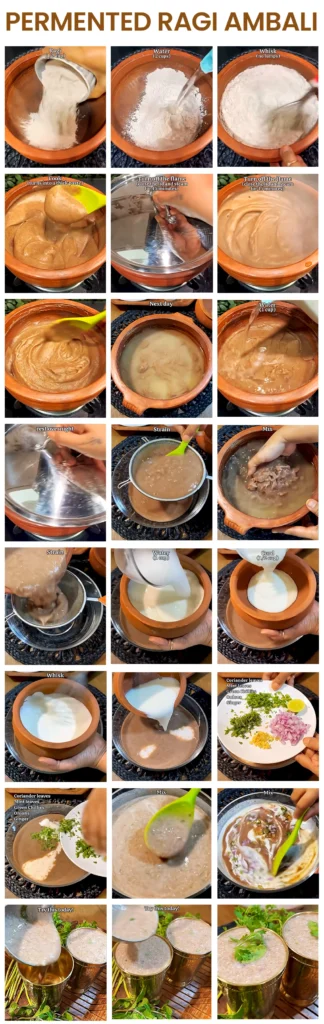
How to prepare millet umbali
A basic preparation can be made using millet flour.
Ingredients
- 1 cup millet flour
- Approximately 2–3 cups water
- Small amount of salt, if desired
Method
- Bring water to a boil.
- Add millet flour gradually.
- Stir continuously to prevent lumps.
- Cook over low-to-medium heat until the flour is thoroughly cooked.
- Continue mixing until it develops a thick, smooth consistency.
- Allow it to cool slightly.
- Serve as a soft preparation or shape it according to the traditional method.
The water-to-flour ratio can be adjusted according to the millet variety and desired consistency.
Healthy Ways to Eat Millet Umbali
For a nutritionally balanced meal, serve it with:
Millet Umbali + Dal + Vegetables + Curd
or
Millet Umbali + Fish/Chicken + Vegetables
or
Millet Umbali + Sambar + Leafy Greens
This combination provides carbohydrates, protein, fibre, vitamins and minerals.
Millet Umbali and Diabetes
Millet can be part of a diabetes-friendly diet, but “millet is good for diabetes” does not mean unlimited quantities are appropriate.
Important factors include:
- Portion size
- Type of millet
- Degree of processing
- Cooking method
- What the millet is eaten with
- Total carbohydrate intake
- Individual glucose response
Whole or minimally processed millet combined with vegetables, pulses and adequate protein may be preferable to refined carbohydrate-heavy meals.
People with diabetes should monitor their glucose response when introducing a new millet preparation and follow their clinician or dietitian’s dietary advice.
Possible Disadvantages and Precautions
Although millets can be nutritious, eating very large quantities may not be appropriate for everyone.
1. Digestive discomfort
A sudden increase in fibre can cause:
- Gas
- Bloating
- Abdominal discomfort
Increase fibre gradually and maintain adequate hydration.
2. Phytates
Millets contain phytates that can bind minerals and reduce their absorption.
Traditional processing such as soaking, fermentation and germination may help improve mineral bioavailability.
3. Not a complete food
Millet Umbali should not be considered nutritionally complete by itself. A varied diet is important.
4. Thyroid considerations
Millets contain goitrogenic compounds, and concerns about millet consumption and thyroid function have been raised particularly with very high or exclusive consumption. Evidence in humans is not strong enough to conclude that ordinary, varied millet consumption causes thyroid disease.
People with diagnosed thyroid disorders should follow individualized dietary advice rather than eliminating all millets unnecessarily.
Millet Umbali vs White Rice
| Feature | Millet Umbali | White Rice |
|---|---|---|
| Fibre | Generally higher | Generally lower |
| Processing | Can be minimally processed | Usually milled/refined |
| Minerals | Provides several minerals | Some minerals are lost during milling |
| Protein | Moderate | Relatively low |
| Gluten | Naturally gluten-free | Naturally gluten-free |
| Blood-glucose response | Varies by millet and preparation | Often relatively rapid |
| Satiety | May be higher because of fibre | May be lower |
The actual glycaemic response depends on the specific millet, cooking method, portion size and complete meal.
Is Millet Umbali Gluten-Free?
Pure millet is naturally gluten-free.
Therefore, Millet Umbali made exclusively with uncontaminated millet flour and gluten-free ingredients can be gluten-free.
However, cross-contamination can occur during milling, processing or preparation. People with coeliac disease or medically diagnosed gluten sensitivity should use appropriately certified gluten-free ingredients.
Bottom Line
Millet Umbali can be a nutritious traditional food when prepared with whole millet and included as part of a balanced diet. It can provide carbohydrates, fibre, protein and important minerals, while pairing it with pulses, vegetables, dairy, eggs or meat improves the overall nutritional profile.
For the best health benefits, rotate different millets rather than relying on one millet every day, maintain appropriate portions and combine millet-based meals with adequate protein and vegetables.
Stay Informed With the Latest & Most Important News
Previous Post
Next Post










Advertisement

-
 01Boost your gut health and immune system naturally
 -
 02Regenerative Stem Cell Treatments in Orthopedics: A Complete Guide to Healing Joints, Bones, and Soft Tissues Naturally
 -
 03Can You Get Vitamin D3 During Sunrise or Sunset? A Scientific Guide
 -
 04Extraordinary Lasoda Glue Berry: Health Benefits, Nutrition, and Traditional Uses
 -
 05Country Eggs: Detailed Information, Nutrition, Benefits, Risks, and How They Compare With Farm Eggs
 -
 06Seasonal mushrooms and snake hole mushrooms: A complete guide
 -
 07The Ultimate Guide to Making Sesame Seed Milk: Recipe, Nutrition & Amazing Health Benefits