




Now Reading: The Ultimate Guide to Making Sesame Seed Milk: Recipe, Nutrition & Amazing Health Benefits
-
01
The Ultimate Guide to Making Sesame Seed Milk: Recipe, Nutrition & Amazing Health Benefits
The Ultimate Guide to Making Sesame Seed Milk: Recipe, Nutrition & Amazing Health Benefits

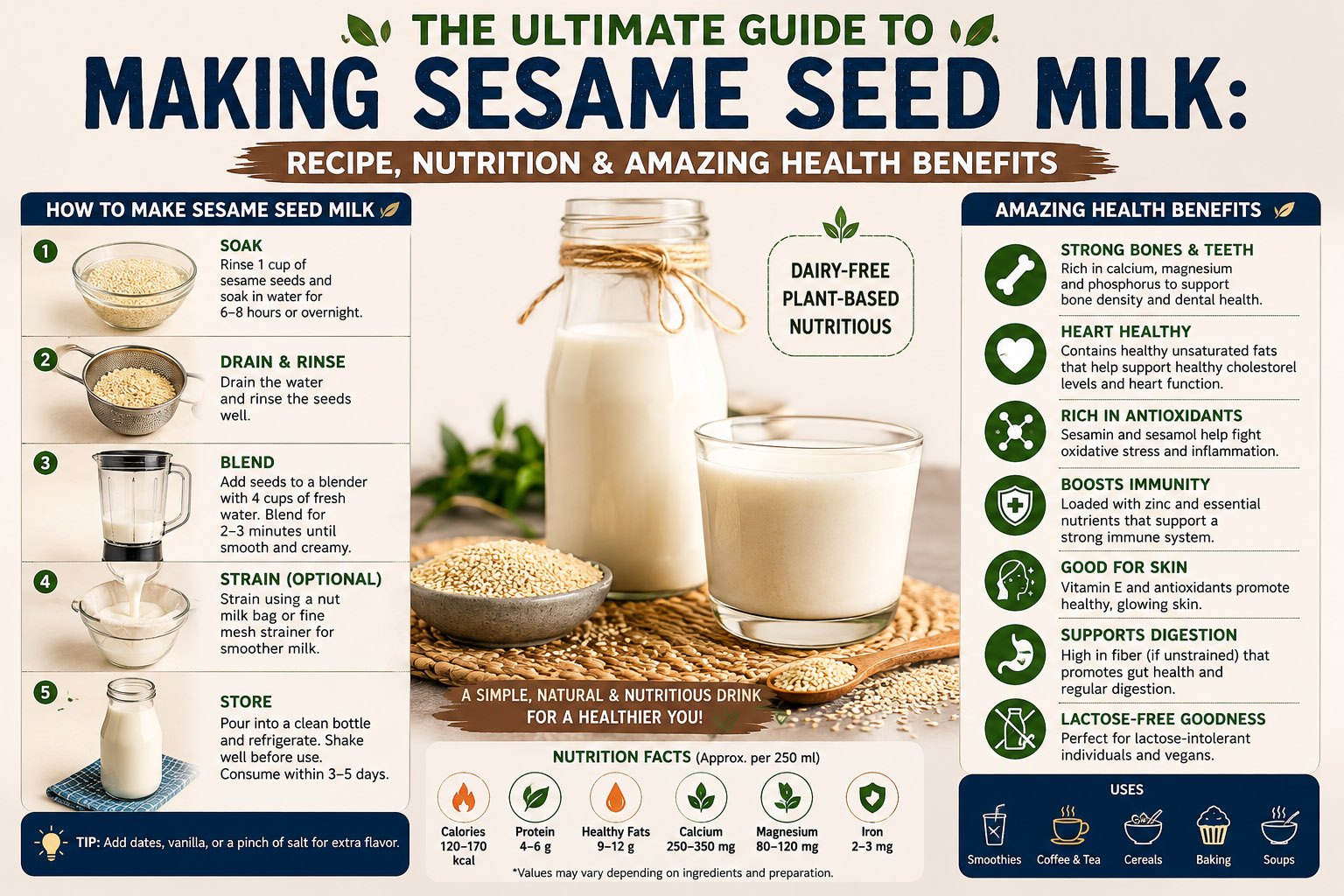
Sesame seed milk is a nutritious, dairy-free plant-based milk made from sesame seeds and water. Sesame Seed Milk is naturally rich in calcium, healthy fats, protein, antioxidants, vitamins, and minerals, making it an excellent alternative to cow’s milk for people who are lactose intolerant, vegan, or simply looking for a healthier beverage.
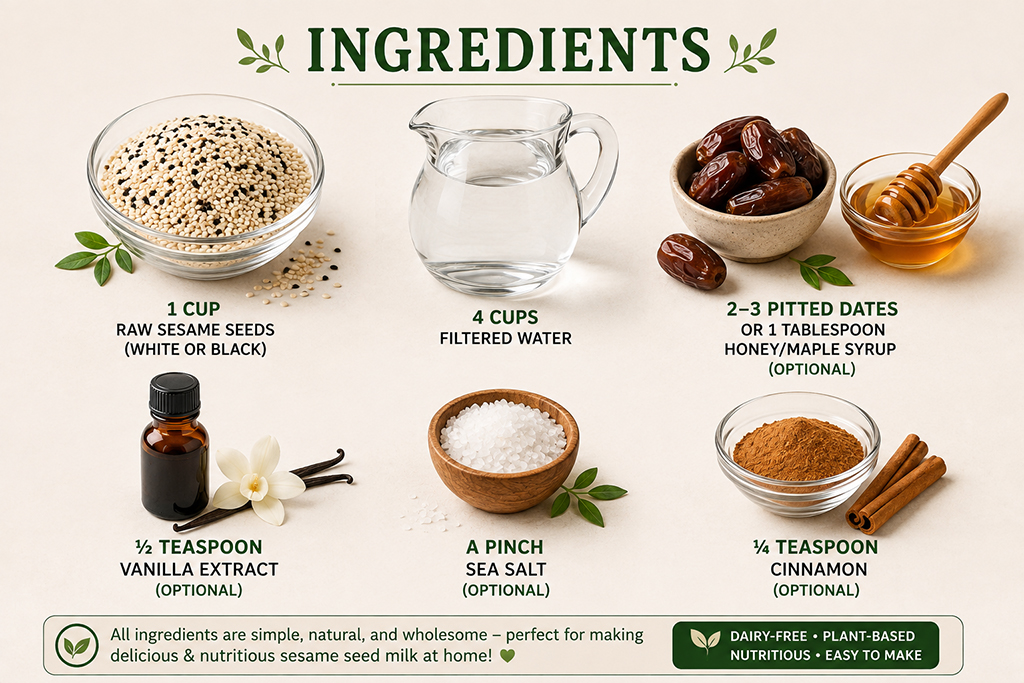
Ingredients
- 1 cup raw sesame seeds (white or black)
- 4 cups filtered water
- 2–3 pitted dates or 1 tablespoon honey/maple syrup (optional)
- ½ teaspoon vanilla extract (optional)
- A pinch of sea salt (optional)
- ¼ teaspoon cinnamon (optional)
Step-by-step process
Step 1: Soak the Sesame Seeds
- Wash the sesame seeds thoroughly.
- Soak them in clean water for 6–8 hours or overnight.
- Soaking softens the seeds and helps reduce bitterness.
Step 2: Drain and Rinse
- Drain the soaking water.
- Rinse the seeds well under fresh water.
Step 3: Blend
- Add the soaked sesame seeds to a high-speed blender.
- Pour in 4 cups of filtered water.
- Add dates, vanilla, or cinnamon if desired.
- Blend for 2–3 minutes until smooth and creamy.
Step 4: Strain (Optional)
- Pour the mixture through a nut milk bag, cheesecloth, or fine mesh strainer.
- Squeeze well to extract all the milk.
- If you prefer thicker milk with more fiber, you can skip straining.
Step 5: Store
- Pour the milk into a clean glass bottle.
- Refrigerate immediately.
- Shake before each use because natural separation occurs.
- Consume within 3–5 days.
Sesame Seed Milk Nutritional value (Approximate per 250 ml)
- Calories: 120–170
- Protein: 4–6 g
- Healthy fats: 9–12 g
- Carbohydrates: 3–6 g
- Fiber: 1–2 g
- Calcium: 250–350 mg
- Magnesium: 80–120 mg
- Iron: 2–3 mg
- Zinc: 1.5–2 mg
- Vitamin E: Small amounts
Values vary depending on dilution and whether the milk is strained.
Health benefits of sesame seed milk
1. Excellent source of calcium
Sesame seeds are naturally rich in calcium, helping to:
- Strengthen bones
- Improve bone density
- Reduce the risk of osteoporosis
- Support healthy teeth
2. Sesame seed milk supports heart health
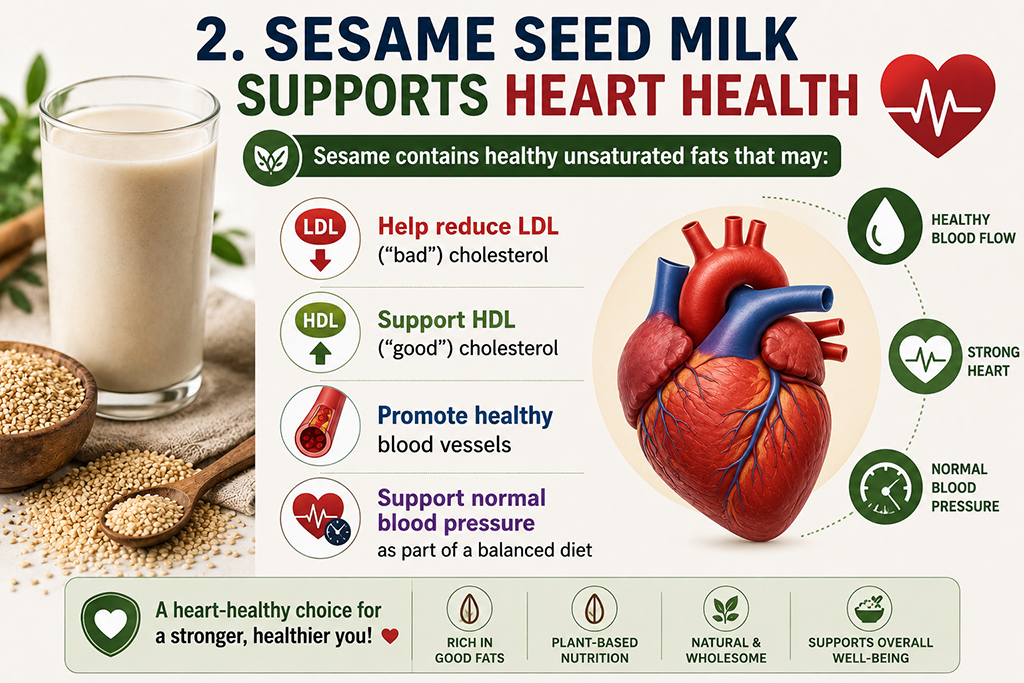
Sesame contains healthy unsaturated fats that may:
- Help reduce LDL (“bad”) cholesterol
- Support HDL (“good”) cholesterol
- Promote healthy blood vessels
- Support normal blood pressure as part of a balanced diet
3. Sesame seed milk rich in plant protein
Sesame milk provides plant-based protein that supports:
- Muscle repair
- Tissue growth
- Healthy metabolism
- Satiety
4. Packed with antioxidants
Sesame contains compounds such as sesamin and sesamol, which help:
- Protect cells from oxidative stress
- Reduce inflammation
- Support healthy aging
5. Sesame seed milk good for bone health
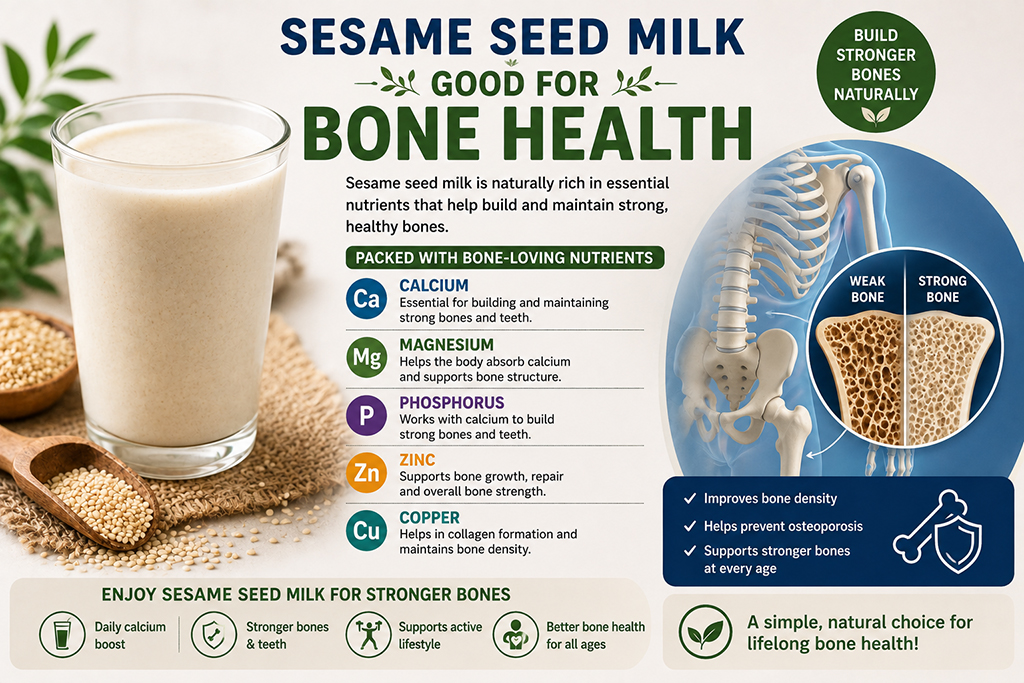
Besides calcium, sesame seeds contain:
- Magnesium
- Phosphorus
- Zinc
- Copper
These nutrients work together to support healthy bones.
6. Supports immune function
Sesame seeds provide zinc and selenium, which contribute to normal immune system function.
7. Helps maintain healthy skin

Vitamin E and healthy fats may help:
- Support skin hydration
- Protect against oxidative damage
- Promote healthy-looking skin
8. Supports digestive health
If consumed unstrained, sesame milk retains fiber that may:
- Promote healthy digestion
- Support regular bowel movements
- Nourish beneficial gut bacteria
9. Lactose-free and dairy-free
Sesame milk is suitable for:
- People with lactose intolerance
- Many vegans
- Individuals avoiding dairy products
10. May help blood sugar management
Sesame seeds are relatively low in carbohydrates and contain healthy fats and fiber, which may help reduce rapid blood sugar spikes when consumed as part of a balanced diet. However, avoid adding excessive sweeteners, especially if you have diabetes.
Best time to drink sesame milk
- Morning with breakfast
- After exercise
- As a healthy afternoon snack
- Before bedtime for a satisfying drink
Ways to use sesame milk
- Smoothies
- Coffee or tea
- Breakfast cereals
- Oatmeal
- Soups
- Pancakes
- Baking recipes
- Protein shakes
Who should be careful?
Sesame milk may not be suitable for:
- People with a sesame allergy
- Individuals advised to limit calorie intake, as sesame seeds are energy-dense
- Those with kidney disease should consult their healthcare provider if they need to monitor mineral intake
Tips for the best sesame milk
- Use fresh, raw sesame seeds.
- Soak overnight for a smoother texture.
- Blend thoroughly for maximum creaminess.
- Add dates instead of refined sugar for natural sweetness.
- Store in the refrigerator and consume within 3–5 days.
- Shake well before serving because separation is natural.
Conclusion
Sesame seed milk is a delicious, nutrient-rich, plant-based beverage that provides calcium, healthy fats, protein, magnesium, iron, and antioxidants. It can be a healthy addition to a balanced diet and is especially useful for people seeking a dairy-free alternative. While it offers many nutritional benefits, it should not be considered a replacement for medical treatment or a guarantee of preventing or treating disease.
Related Posts

Stay Informed With the Latest & Most Important News
Previous Post
Next Post













Advertisement

-
 01Boost your gut health and immune system naturally
 -
 02Regenerative Stem Cell Treatments in Orthopedics: A Complete Guide to Healing Joints, Bones, and Soft Tissues Naturally
 -
 03Can You Get Vitamin D3 During Sunrise or Sunset? A Scientific Guide
 -
 04The Ultimate Guide to Making Sesame Seed Milk: Recipe, Nutrition & Amazing Health Benefits
 -
 05Country Eggs: Detailed Information, Nutrition, Benefits, Risks, and How They Compare With Farm Eggs
 -
 06Extraordinary Lasoda Glue Berry: Health Benefits, Nutrition, and Traditional Uses
 -
 07Seasonal mushrooms and snake hole mushrooms: A complete guide