


Now Reading: Soluble Fiber: A Complete Guide to Its Benefits, Food Sources, and Daily Requirements
-
01
Soluble Fiber: A Complete Guide to Its Benefits, Food Sources, and Daily Requirements
Soluble Fiber: A Complete Guide to Its Benefits, Food Sources, and Daily Requirements

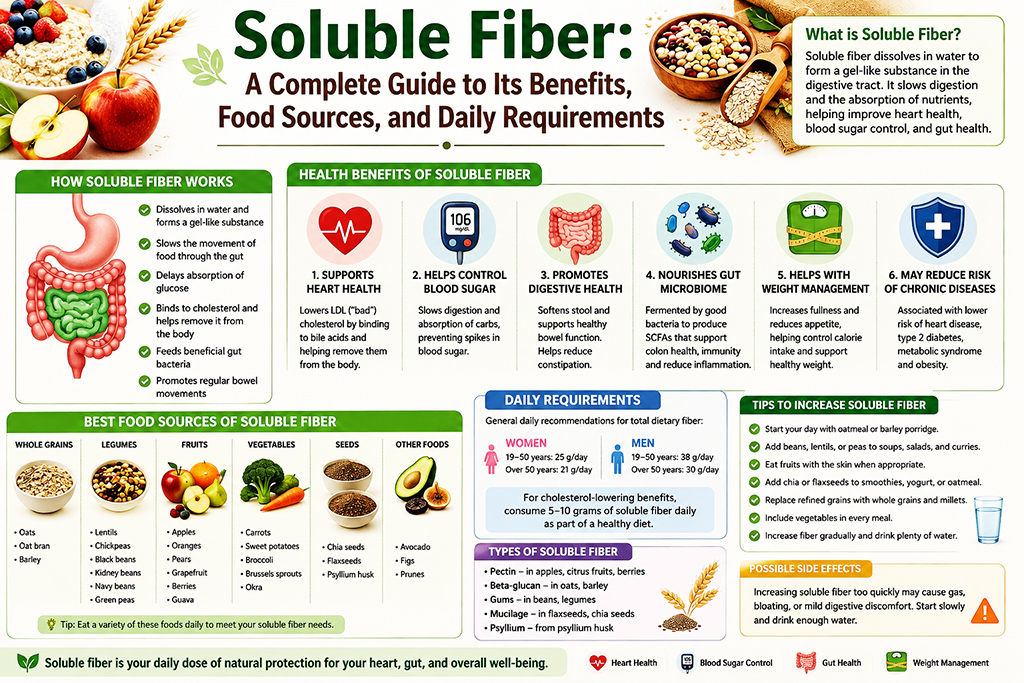
Soluble fiber is one of the most important nutrients for maintaining overall health. Soluble fiber plays a vital role in supporting the digestive system, heart health, blood sugar control, and the gut microbiome. Unlike other nutrients, fiber is not digested by the human body. Instead, Soluble fiber passes through the digestive tract, where Soluble fiber performs several beneficial functions.
Although many people know that fiber is good for health, they are often unaware that there are two main types of dietary fiber: soluble fiber and insoluble fiber. Both are essential, but soluble fiber has unique properties that make it especially valuable for metabolic and cardiovascular health.
What Is Soluble Fiber?
Soluble fiber is a type of dietary fiber that dissolves in water to form a thick, gel-like substance in the digestive tract. This gel slows down digestion and the absorption of nutrients, helping regulate blood sugar and cholesterol levels.
Unlike carbohydrates, proteins, and fats, soluble fiber is not broken down by digestive enzymes. Instead, it( is fermented by beneficial bacteria in the large intestine, producing compounds known as short-chain fatty acids (SCFAs) that help maintain gut health.
How Soluble Fiber Works
When you eat foods rich in soluble fiber, the fiber (Soluble fiber) absorbs water and expands, creating a gel-like consistency in your stomach and intestines. This process provides several health benefits:
- Slows the movement of food through the digestive system.
- Delays the absorption of glucose into the bloodstream.
- Binds to cholesterol-rich bile acids and helps remove them from the body.
- Feeds beneficial gut bacteria.
- Promotes regular bowel movements.
Health Benefits of Soluble Fiber
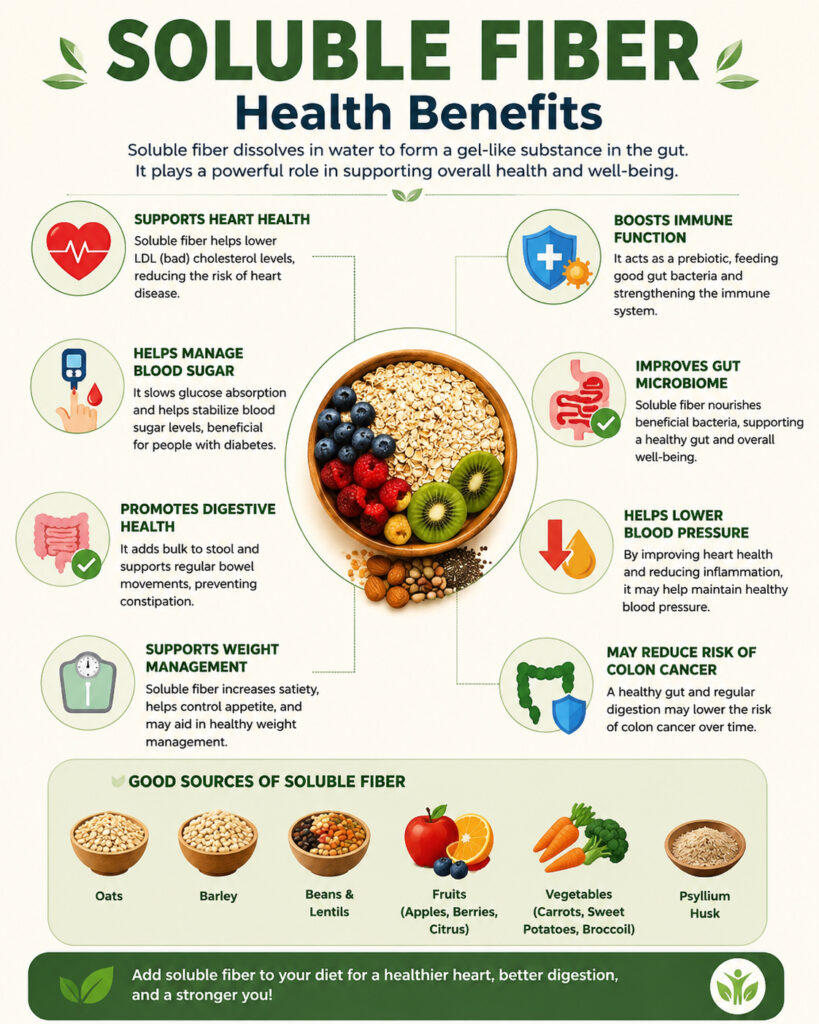
1. Supports Heart Health
One of the best-known benefits of soluble fiber is its ability to reduce LDL (“bad”) cholesterol.
It binds to bile acids containing cholesterol and helps eliminate them through the stool. To replace these bile acids, the liver uses cholesterol from the bloodstream, lowering LDL cholesterol levels.
Regular intake of soluble fiber may:
- Lower LDL cholesterol.
- Support healthy blood vessels.
- Reduce the risk of heart disease.
- Help maintain healthy blood pressure when combined with a balanced diet.
2. Helps Control Blood Sugar
Soluble fiber slows the digestion and absorption of carbohydrates, preventing rapid spikes in blood glucose after meals.
This is especially beneficial for:
- People with type 2 diabetes.
- Individuals with prediabetes.
- Those with insulin resistance.
Steadier blood sugar levels may also improve energy levels and reduce hunger.
3. Promotes Digestive Health
The gel formed by soluble fiber softens stool and supports healthy bowel function.
It can help:
- Reduce occasional constipation.
- Improve stool consistency.
- Support a healthy digestive tract.
Unlike some harsh laxatives, soluble fiber works naturally by absorbing water.
4. Nourishes the Gut Microbiome
Beneficial bacteria in the colon ferment soluble fiber and produce short-chain fatty acids (SCFAs) such as:
- Butyrate
- Acetate
- Propionate
These compounds:
- Nourish the cells lining the colon.
- Support immune function.
- Reduce intestinal inflammation.
- Promote a balanced gut microbiome.
5. Helps with Weight Management
Because soluble fiber absorbs water and expands in the stomach, it increases feelings of fullness.
This can:
- Reduce appetite.
- Help prevent overeating.
- Support healthy weight loss when combined with regular exercise and a balanced diet.
6. May Reduce the Risk of Certain Diseases
Research suggests that diets rich in soluble fiber are associated with a lower risk of:
- Cardiovascular disease
- Type 2 diabetes
- Obesity
- Metabolic syndrome
A high-fiber diet also supports long-term digestive and metabolic health.
Best Food Sources of Soluble Fiber
Many plant-based foods contain soluble fiber. Excellent sources include:
Whole Grains
- Oats
- Oat bran
- Barley
Legumes
- Lentils
- Chickpeas
- Black beans
- Kidney beans
- Navy beans
- Green peas
Fruits
- Apples
- Oranges
- Pears
- Grapefruit
- Berries
- Guava
Vegetables
- Carrots
- Sweet potatoes
- Broccoli
- Brussels sprouts
- Okra
Seeds
- Chia seeds
- Flaxseeds
- Psyllium husk
Other Foods
- Avocados
- Figs
- Prunes
Types of Soluble Fiber
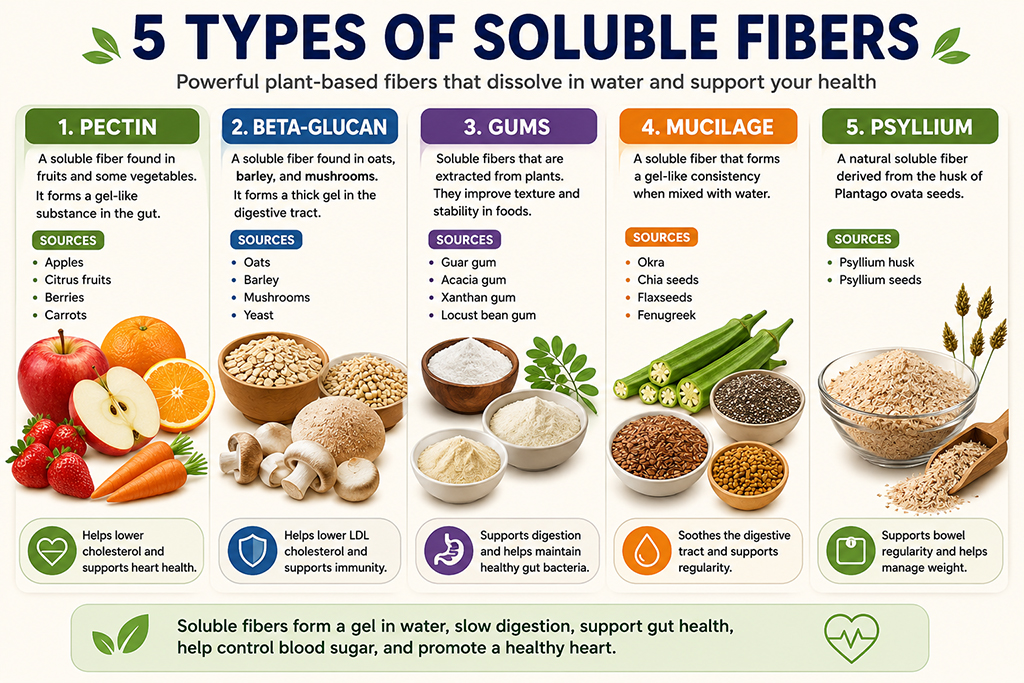
Several forms of soluble fiber occur naturally in foods:
- Pectin – Found in apples, citrus fruits, and berries.
- Beta-glucan – Found in oats and barley; well known for cholesterol reduction.
- Gums – Present in beans and legumes.
- Mucilage – Found in flaxseeds and chia seeds.
- Psyllium – Derived from psyllium husks and commonly used as a fiber supplement.
How Much Soluble Fiber Do You Need?
General daily recommendations for total dietary fiber are:
- Women (19–50 years): 25 grams/day
- Men (19–50 years): 38 grams/day
- Women over 50: 21 grams/day
- Men over 50: 30 grams/day
For cholesterol-lowering benefits, consuming approximately 5–10 grams of soluble fiber daily may be helpful as part of a healthy diet.
Tips to Increase Soluble Fiber Intake
- Start your day with oatmeal.
- Add beans or lentils to soups, salads, and curries.
- Eat fruits with the skin when appropriate.
- Snack on pears, apples, or oranges.
- Add chia or flaxseeds to yogurt, smoothies, or oatmeal.
- Replace refined grains with whole grains.
- Include vegetables in every meal.
Increase fiber gradually over several weeks and drink plenty of water to reduce the chance of gas or bloating.
Can You Take Soluble Fiber Supplements?
Yes. If you cannot meet your fiber needs through food alone, supplements such as psyllium husk may help. However, whole foods are generally the best source because they also provide vitamins, minerals, antioxidants, and other beneficial plant compounds.
People taking medications should consult a healthcare professional before using fiber supplements, as they can affect the absorption of certain medicines.
Are There Any Side Effects?
Increasing soluble fiber too quickly may cause:
- Gas
- Bloating
- Abdominal discomfort
- Temporary changes in bowel habits
These effects usually improve as your digestive system adapts. Drinking enough water and increasing fiber gradually can minimize discomfort.
Conclusion
Soluble fiber is an essential part of a healthy diet. By forming a gel-like substance in the digestive tract, it helps lower LDL cholesterol, stabilize blood sugar, improve digestion, support beneficial gut bacteria, and promote long-lasting fullness. Foods such as oats, barley, beans, lentils, fruits, vegetables, chia seeds, and flaxseeds are excellent natural sources. Including a variety of these foods in your daily meals can contribute significantly to better heart health, digestive wellness, metabolic health, and overall well-being.
Related Posts

Stay Informed With the Latest & Most Important News
Previous Post
Next Post













Advertisement

-
 01Boost your gut health and immune system naturally
 -
 02Regenerative Stem Cell Treatments in Orthopedics: A Complete Guide to Healing Joints, Bones, and Soft Tissues Naturally
 -
 03Can You Get Vitamin D3 During Sunrise or Sunset? A Scientific Guide
 -
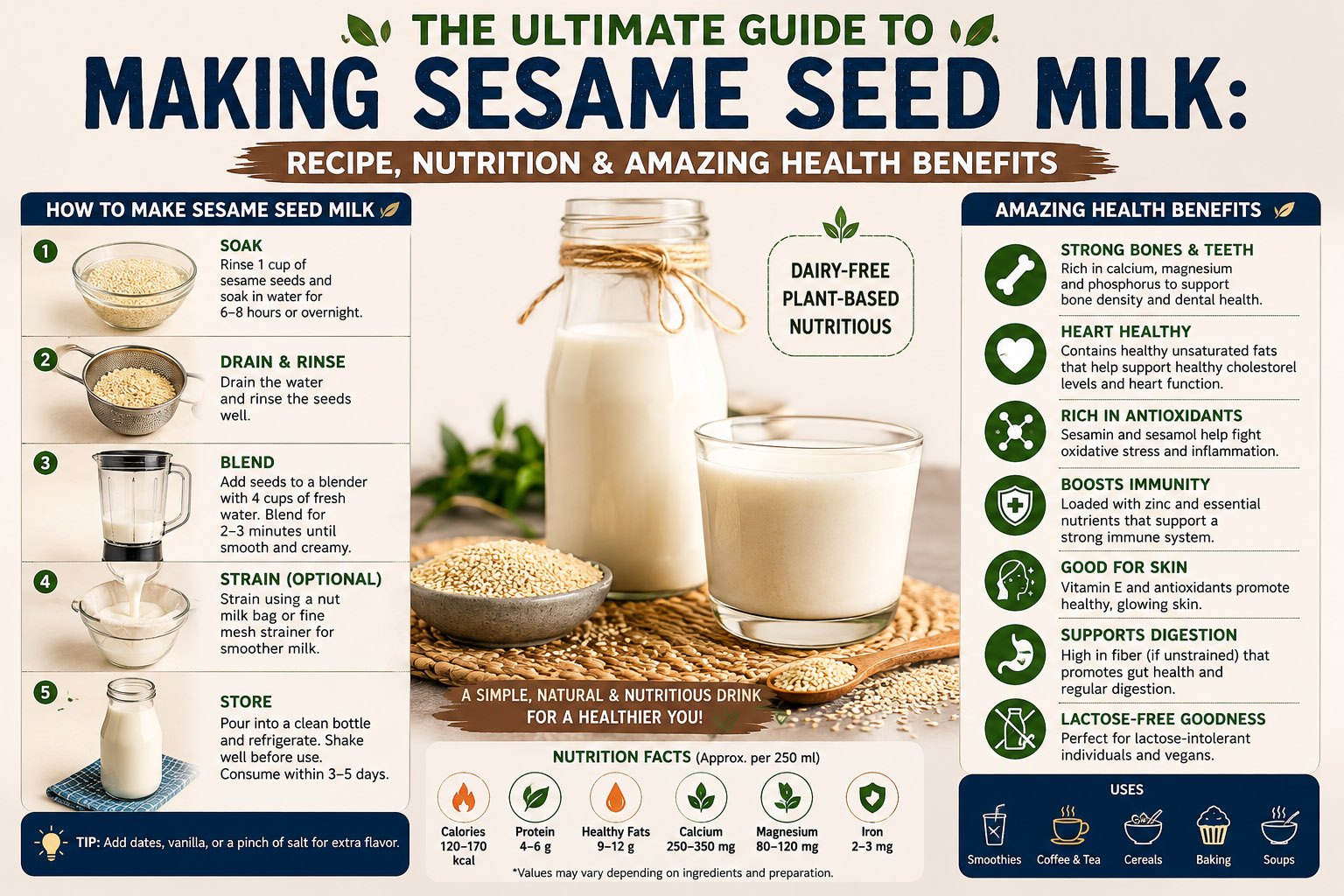
 04The Ultimate Guide to Making Sesame Seed Milk: Recipe, Nutrition & Amazing Health Benefits
 -
 05Country Eggs: Detailed Information, Nutrition, Benefits, Risks, and How They Compare With Farm Eggs
 -
 06Extraordinary Lasoda Glue Berry: Health Benefits, Nutrition, and Traditional Uses
 -
 07Seasonal mushrooms and snake hole mushrooms: A complete guide