
Now Reading: Can You Get Vitamin D3 During Sunrise or Sunset? A Scientific Guide
-
01
Can You Get Vitamin D3 During Sunrise or Sunset? A Scientific Guide
Can You Get Vitamin D3 During Sunrise or Sunset? A Scientific Guide

Introduction
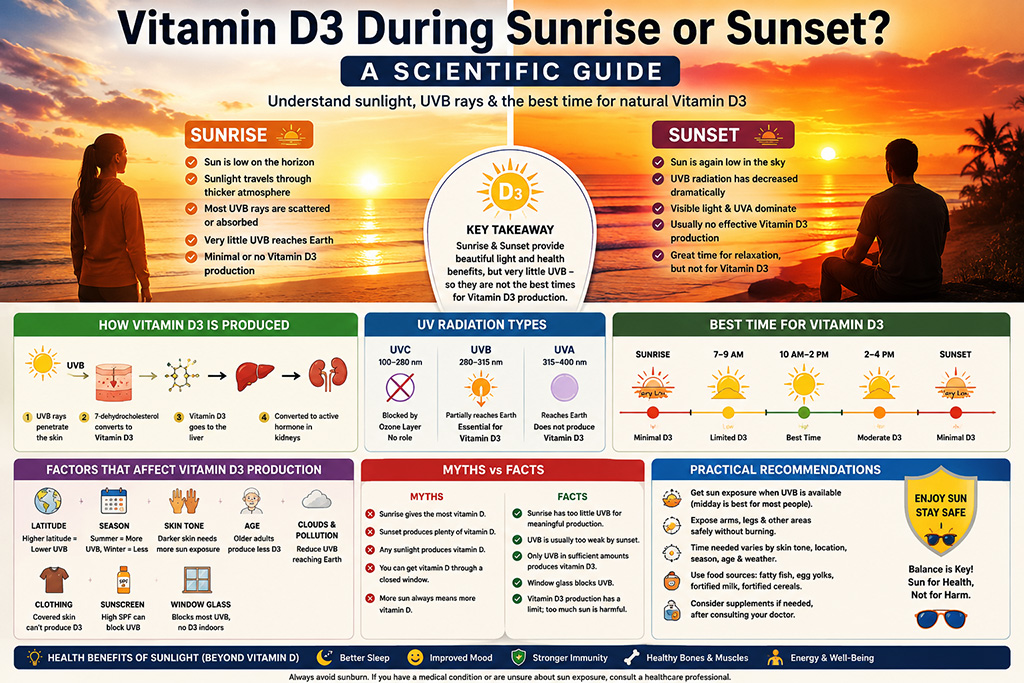
Vitamin D3 (Vitamin D3 During Sunrise or Sunset) , often called the “sunshine vitamin,” is essential for healthy bones, muscles, the immune system, and many other bodily functions. Many people believe that simply standing in the sunlight at sunrise or sunset is enough to produce vitamin D3. However, the science behind vitamin D3 production is more complex.
The key factor is not just sunlight itself but the presence of ultraviolet B (UVB) radiation, which triggers vitamin D3 (Vitamin D3 During Sunrise or Sunset) synthesis in the skin. This article explains whether sunrise and sunset provide enough UVB, the best times for vitamin D3 production, common myths, and practical recommendations.
What is vitamin D3?
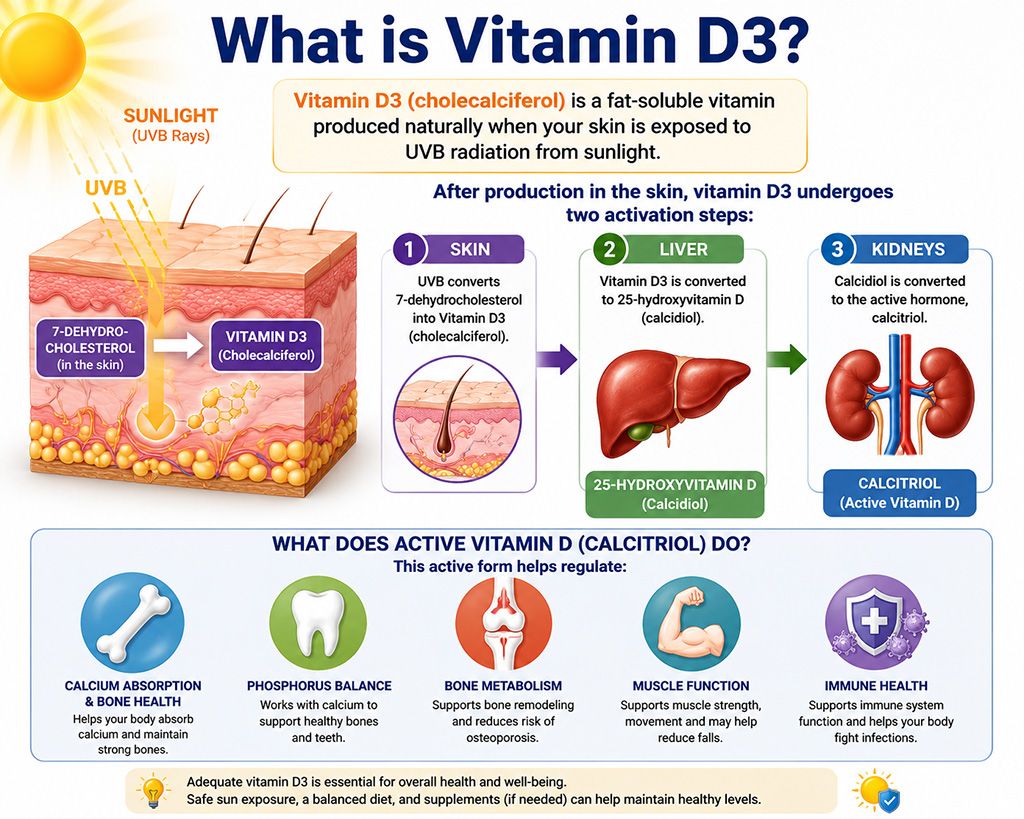
Vitamin D3 (Vitamin D3 During Sunrise or Sunset) (cholecalciferol) is a fat-soluble vitamin produced naturally when your skin is exposed to UVB radiation from sunlight.
After production in the skin, vitamin D3 undergoes two activation steps:
- Skin: UVB converts 7-dehydrocholesterol into vitamin D3.
- Liver: Vitamin D3 is converted to 25-hydroxyvitamin D (calcidiol).
- Kidneys: Calcidiol is converted to the active hormone, calcitriol.
This active form helps regulate calcium, phosphorus, bone metabolism, muscle function, and immune health.
Why sunlight matters
Sunlight contains different types of ultraviolet radiation:
| UV Radiation | Wavelength | Reaches Earth? | Role in Vitamin D3 |
| UVC | 100–280 nm | No (blocked by the ozone layer) | None |
| UVB | 280–315 nm | Partially | Produces vitamin D3 |
| UVA | 315–400 nm | Yes | Does not produce vitamin D3 |
Only UVB radiation can stimulate vitamin D3 (Vitamin D3 During Sunrise or Sunset) production.
What happens during sunrise?
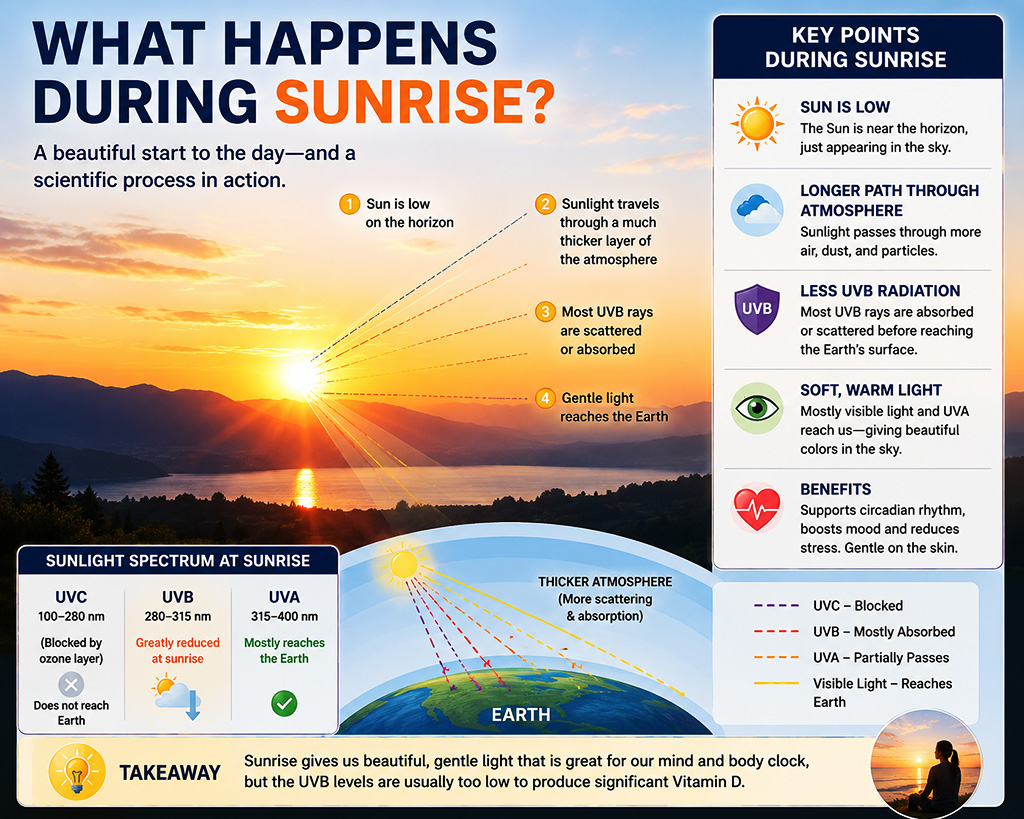
At sunrise:
- The Sun is very low on the horizon.
- Sunlight travels through a much thicker layer of the atmosphere.
- Most UVB rays are absorbed or scattered before reaching the ground.
- UVA and visible light dominate.
Can you produce vitamin D3 at sunrise?
Generally, very little or none.
Although sunrise provides beautiful natural light and may support circadian rhythm and mood, UVB intensity is usually too low for significant vitamin D3 (Vitamin D3 During Sunrise or Sunset) synthesis.
Benefits of sunrise exposure
- Helps regulate the body’s internal clock.
- Supports better sleep patterns.
- Improves mood and alertness.
- Gentle on the skin with a low risk of sunburn.
However, these benefits are largely independent of vitamin D production.
What happens during sunset?
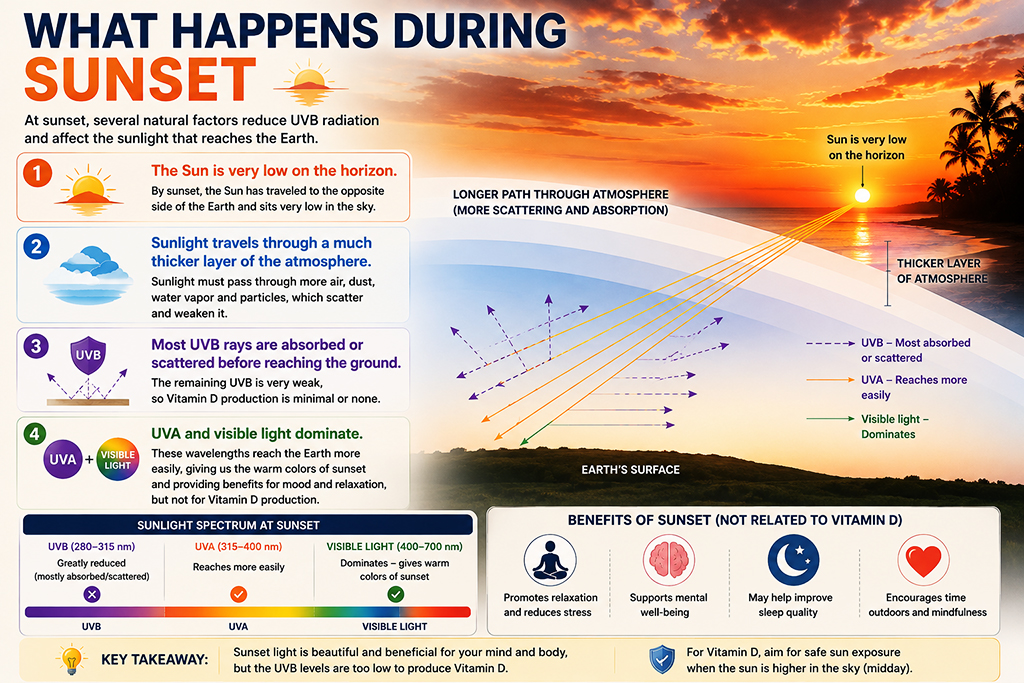
At sunset:
- The Sun is again very low in the sky.
- UVB radiation has decreased dramatically.
- Visible light and UVA remain more prevalent than UVB.
Can you produce vitamin D3 (Vitamin D3 During Sunrise or Sunset) at sunset?
Usually no.
By sunset, UVB levels are generally insufficient to trigger meaningful vitamin D3 production.
Benefits of Sunset Exposure
- Promotes relaxation.
- May help reduce stress.
- Encourages outdoor activity.
- Lowers the risk of sunburn.
These are worthwhile health benefits, but they should not be relied upon for vitamin D synthesis.
Why UVB is essential
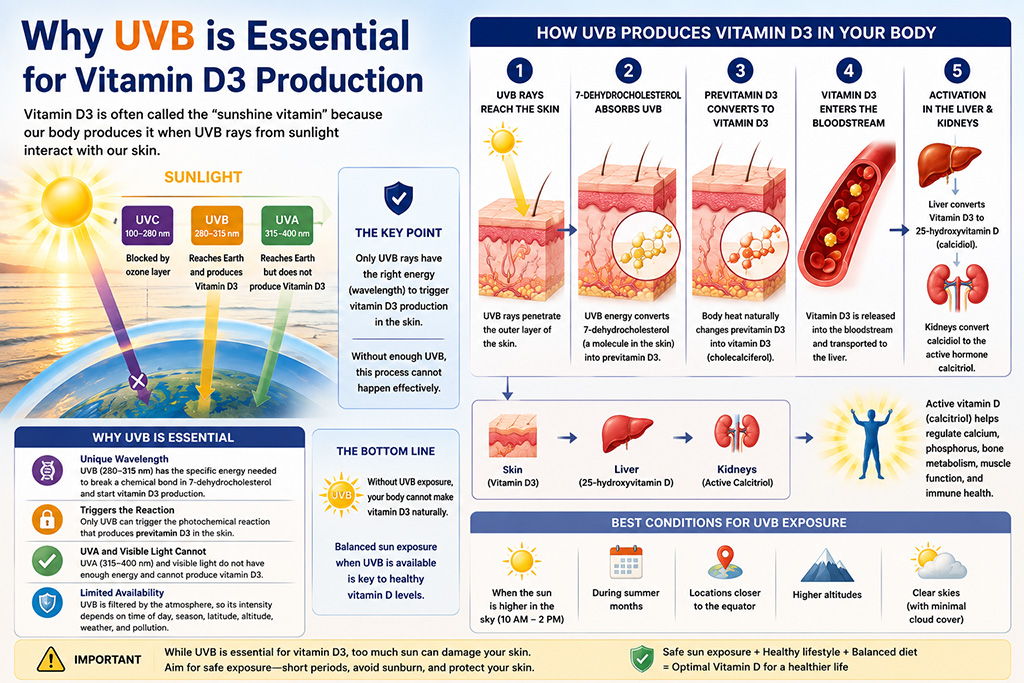
Vitamin D3 (Vitamin D3 During Sunrise or Sunset) production begins when UVB photons strike a compound in the skin called 7-dehydrocholesterol.
The process is:
- UVB reaches the skin.
- 7-dehydrocholesterol absorbs UVB.
- It converts into previtamin D3.
- Body heat transforms previtamin D3 into vitamin D3.
- Vitamin D3 enters the bloodstream for further activation.
Without enough UVB, this process cannot occur effectively.
Best time to produce vitamin D3 (Vitamin D3 During Sunrise or Sunset)
The exact time depends on your location, season, altitude, and weather, but in many regions:
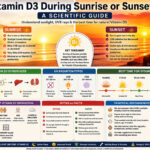
| Time | UVB Availability | Vitamin D3 Production |
| Sunrise | Very Low | Minimal or none |
| 7–9 AM | Low | Usually limited |
| 10 AM–2 PM | High | Best |
| 2–4 PM | Moderate | Moderate |
| Sunset | Very Low | Minimal or none |
Vitamin D3 production potential by time of day
Illustrative comparison of typical UVB availability under clear-sky conditions.
0%30%60%90%120%Sunrise7–9 AM10 AM–2 PM2–4 PMSunset
Factors that affect vitamin D3 (Vitamin D3 During Sunrise or Sunset) production
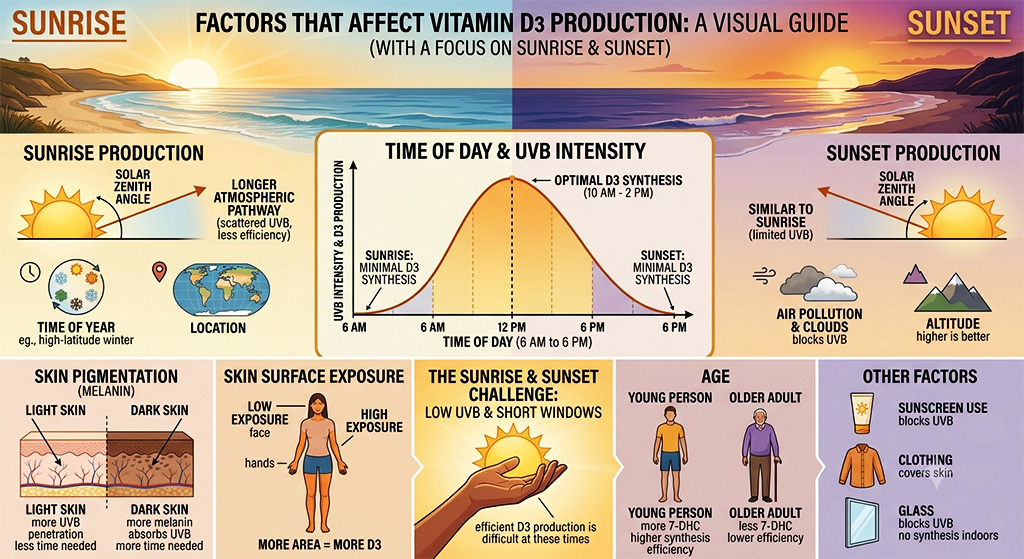
1. Latitude
People living farther from the equator receive less UVB during winter.
2. Season
- Summer: Higher UVB
- Winter: Lower UVB, especially at higher latitudes
3. Time of day
Midday generally provides the strongest UVB.
4. Cloud cover
Clouds can substantially reduce UVB reaching the ground.
5. Air pollution
Pollution can scatter and absorb UVB, decreasing vitamin D production.
6. Skin tone
People with darker skin have more melanin, which reduces UVB penetration. They often require longer sun exposure (Vitamin D3 During Sunrise or Sunset) than people with lighter skin to produce similar amounts of vitamin D.
7. Age
Older adults produce less vitamin D3 in their skin than younger adults.
8. Clothing
Covered skin cannot produce vitamin D.
9. Sunscreen
Properly applied high-SPF sunscreen can reduce UVB reaching the skin, although real-world use often results in some incidental UV exposure.
10. Glass windows
Ordinary window glass blocks most UVB, so sitting indoors in sunlight usually does not produce vitamin D3.
Myths vs Facts
| Myth | Fact |
| Sunrise gives the most vitamin D (Vitamin D3 During Sunrise or Sunset). | Sunrise generally has too little UVB for meaningful vitamin D production. |
| Sunset produces plenty of vitamin D. | UVB is usually too weak by sunset. |
| Any sunlight (Vitamin D3 During Sunrise or Sunset) produces vitamin D. | Only sunlight containing enough UVB can stimulate vitamin D production. |
| You can get vitamin D (Vitamin D3 During Sunrise or Sunset) through a closed window. | Most window glass blocks UVB. |
| More sun always means more vitamin D (Vitamin D3 During Sunrise or Sunset). | Vitamin D production reaches a limit, while excessive UV exposure increases skin damage and skin cancer risk. |
Practical recommendations
For many healthy adults:
- Aim for brief sun exposure when UVB is available, while avoiding sunburn.
- Expose larger skin areas such as the arms and legs when appropriate.
- Individual needs vary based on skin tone, location, season, age, and medical conditions.
- If sunlight is limited, consider vitamin D-rich foods such as fatty fish, egg yolks, fortified dairy products, and fortified cereals.
- Speak with a healthcare professional before taking high-dose vitamin D supplements, especially if you have medical conditions or take medications that affect vitamin D metabolism.
Scientific summary
Research consistently shows that vitamin D3 production depends primarily on UVB radiation, not simply visible sunlight. Because the Sun is low in the sky during sunrise and sunset, the atmosphere filters out much of the UVB before it reaches the Earth’s surface. As a result, these times generally provide little or no effective vitamin D3 production. In contrast, when the Sun is higher in the sky—typically around the middle of the day—more UVB reaches the skin, making vitamin D synthesis much more efficient, provided exposure is balanced against the risk of sunburn.
Conclusion
Sunrise and sunset are excellent times to enjoy the outdoors, support your circadian rhythm, and experience the psychological benefits of natural light. However, they are generally not the best times to produce vitamin D3 because UVB radiation is usually too weak.
For most people, the most effective vitamin D3 production occurs when the Sun is higher in the sky and UVB rays are strongest. The ideal exposure time varies with latitude, season, weather, skin tone, and age. Balancing sensible sun exposure with skin protection—and using dietary sources or supplements when needed—is the most reliable strategy for maintaining healthy vitamin D levels.
Related Posts
Stay Informed With the Latest & Most Important News










Advertisement

-
 01Boost your gut health and immune system naturally
 -
 02Regenerative Stem Cell Treatments in Orthopedics: A Complete Guide to Healing Joints, Bones, and Soft Tissues Naturally
 -
 03Can You Get Vitamin D3 During Sunrise or Sunset? A Scientific Guide
 -
 04The Ultimate Guide to Making Sesame Seed Milk: Recipe, Nutrition & Amazing Health Benefits
 -
 05Country Eggs: Detailed Information, Nutrition, Benefits, Risks, and How They Compare With Farm Eggs
 -
 06Extraordinary Lasoda Glue Berry: Health Benefits, Nutrition, and Traditional Uses
 -
 07Seasonal mushrooms and snake hole mushrooms: A complete guide