
Now Reading: Foxtail Millet: Detailed Information, Nutrition, Benefits, Uses, and Side Effects
-
01
Foxtail Millet: Detailed Information, Nutrition, Benefits, Uses, and Side Effects
Foxtail Millet: Detailed Information, Nutrition, Benefits, Uses, and Side Effects

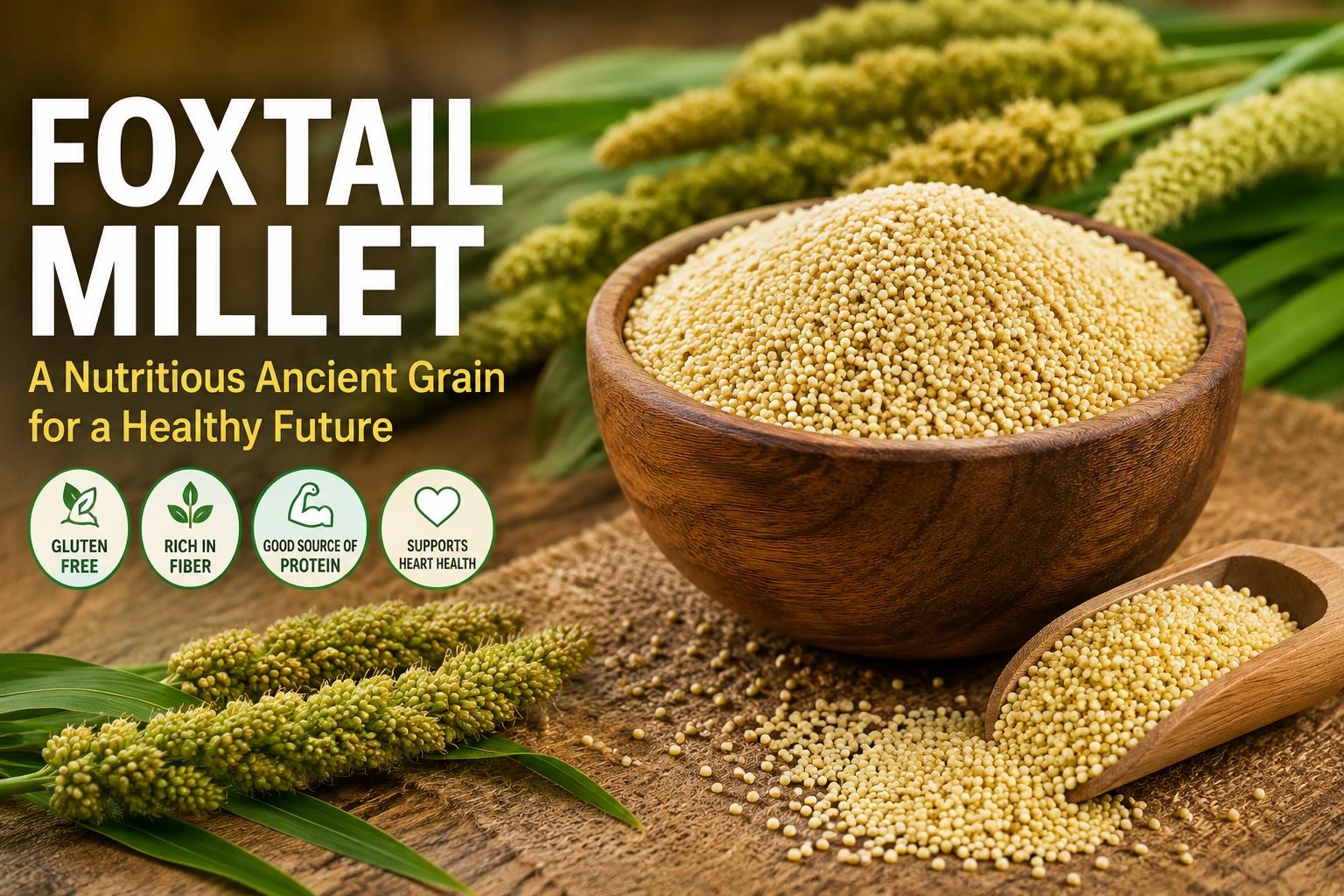
Foxtail millet is a small-grained cereal belonging to the millet family. It has been cultivated for thousands of years in Asia and is traditionally used in India, China, and several other countries. In India, it is commonly known as foxtail millet, Kangni (Hindi), Korralu (Telugu), Thinai (Tamil), Navane (Kannada), and Kang (some regional languages).
Foxtail millet is naturally gluten-free, provides complex carbohydrates, dietary fiber, plant protein, minerals, and various bioactive compounds. Foxtail millet can be a useful alternative to refined grains, particularly when incorporated into a balanced diet.
1. What is foxtail millet?
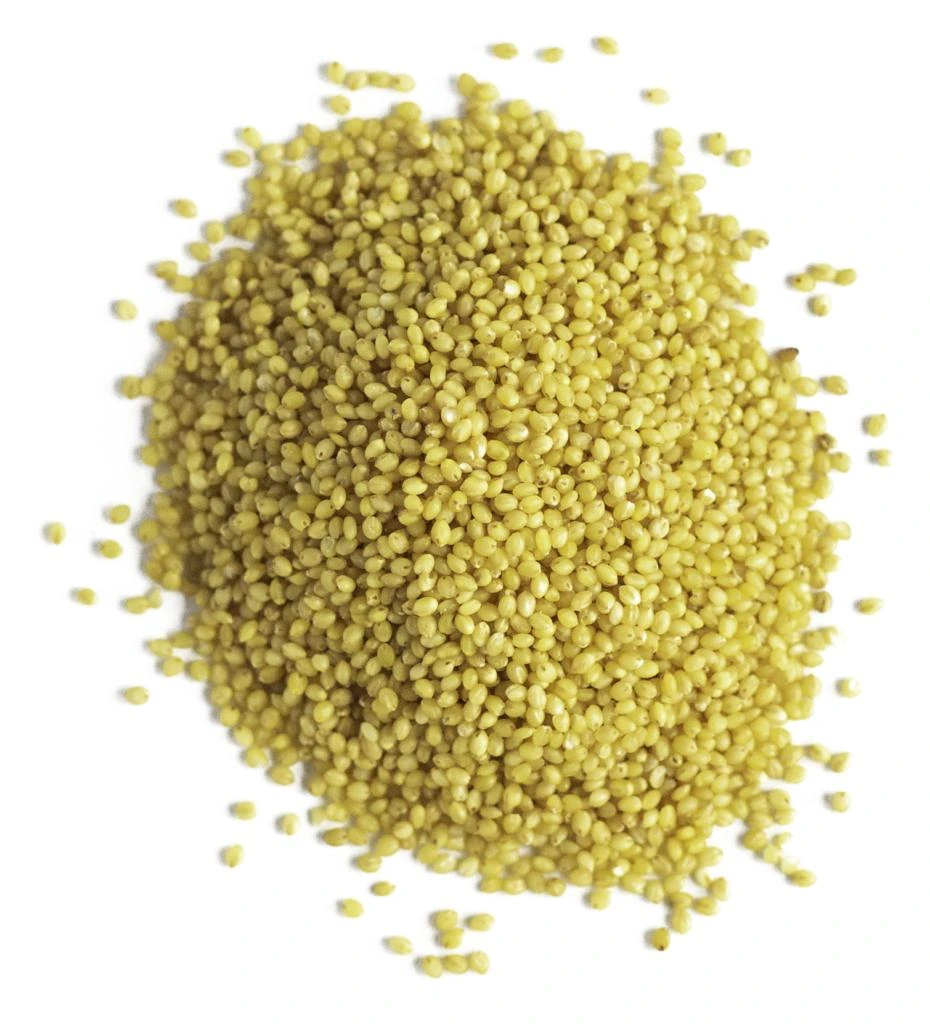
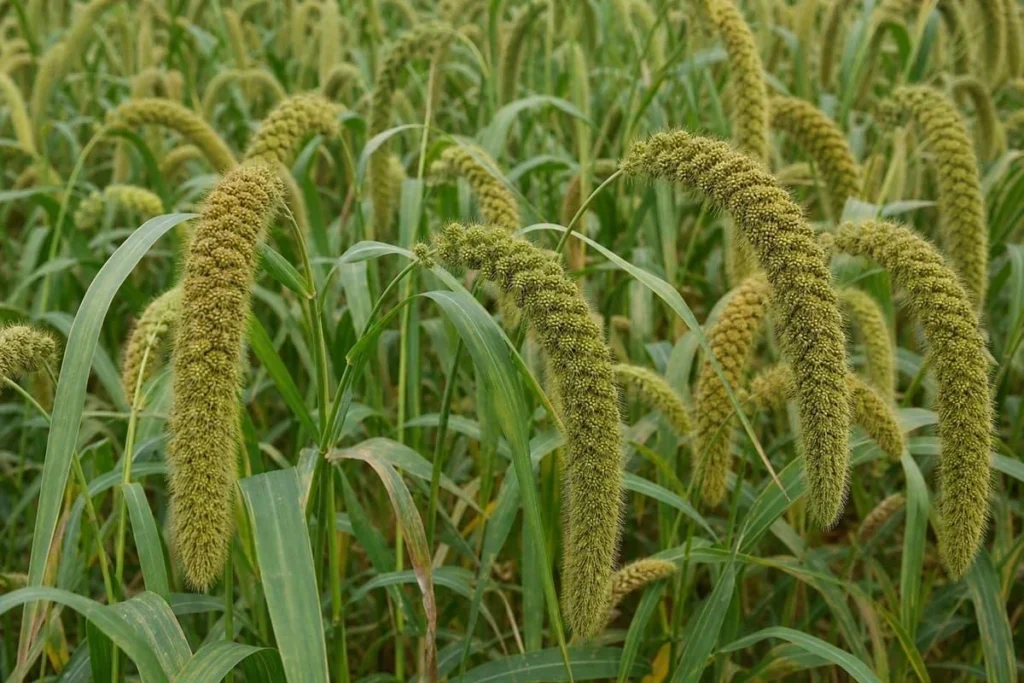
Foxtail millet is scientifically known as Setaria italica. It gets its name from its characteristic seed head, which resembles a fox’s tail.
Foxtail millet is an ancient grain that grows relatively well in dry conditions and requires less water than many conventional cereal crops.
Foxtail millet can be consumed as:
- Whole cooked grains
- Porridge
- Upma
- Dosa
- Idli
- Roti
- Khichdi
- Millet rice
- Breakfast cereals
- Flour
- Salads
- Snacks
Foxtail millet the exact nutritional composition varies according to variety, processing, and cooking method. Foxtail millet Approximately 100 g of raw foxtail millet provides:
2. Foxtail millet nutrition
| Nutrient | Approximate amount |
|---|---|
| Foxtail millet Energy | ~330–360 kcal (Foxtail millet) |
| Foxtail millet Carbohydrates | ~60–70 g (Foxtail millet) |
| Foxtail millet Protein | ~10–13 g (Foxtail millet) |
| Foxtail millet Dietary fiber | ~6–9 g (Foxtail millet) |
| Foxtail millet Fat | ~3–5 g (Foxtail millet) |
| Foxtail millet Iron | ~2–3 mg (Foxtail millet) |
| Foxtail millet Magnesium | ~80–100 mg (Foxtail millet) |
| Foxtail millet Phosphorus | ~250–300 mg (Foxtail millet) |
| Foxtail millet Potassium | ~200–300 mg (Foxtail millet) |
| Foxtail millet Calcium | ~25–35 mg (Foxtail millet) |
These numbers are approximate and can vary substantially between varieties and food-composition databases.
Important point
Foxtail millet is nutritious, but it is not a low-carbohydrate food. Foxtail millet still contains a substantial amount of carbohydrate. Therefore, people with diabetes should consider portion size and the overall meal composition, rather than assuming that replacing rice with millet automatically controls blood glucose.
3. Foxtail millet major health benefits of foxtail millet
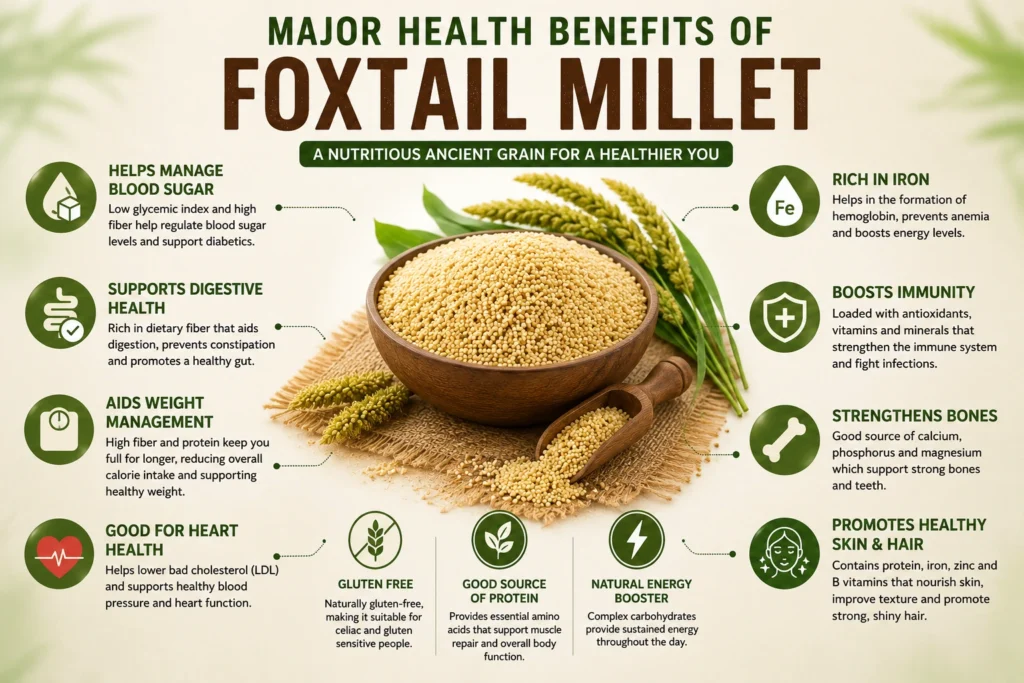
3.1 Foxtail millet may help support blood-sugar management
Foxtail millet contains complex carbohydrates and dietary fiber. Compared with highly refined carbohydrate foods, replacing some refined grains with whole or minimally processed millet may produce a more favorable post-meal glucose response.
However, the effect depends on:
- Portion size
- Cooking method
- Degree of processing
- What foods are eaten with it
- Individual insulin sensitivity
- Overall carbohydrate intake
For someone with diabetes, foxtail millet can be part of a balanced diet, but it should not be considered a treatment for diabetes.
A useful meal combination is:
Foxtail millet + vegetables + protein + healthy fat
For example:
Foxtail millet + vegetable curry + dal/egg/fish + salad
This generally provides a more balanced meal than consuming a large bowl of millet alone.
3.2 Foxtail millet Supports digestive health
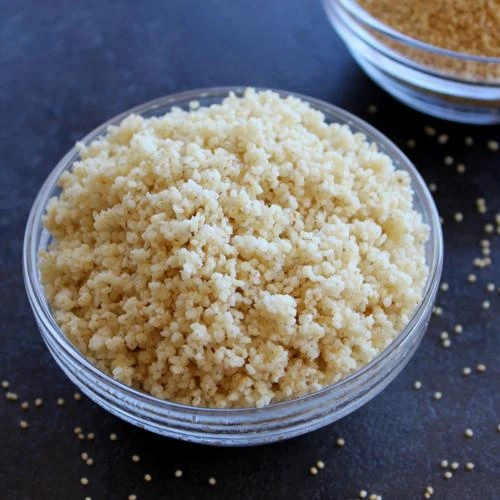
Foxtail millet provides dietary fiber, which can support normal bowel function.
Adequate fiber can:
- Increase stool bulk
- Support regular bowel movements
- Help prevent constipation
- Support beneficial gut microorganisms
- Contribute to satiety
If someone is not accustomed to high-fiber foods, suddenly eating large quantities of millet may cause:
- Gas
- Bloating
- Abdominal discomfort
Increase the amount gradually and maintain adequate hydration.
4. Foxtail millet and weight management
Foxtail millet can be useful in a weight-management diet because its fiber and protein content can contribute to satiety.
However, millet itself does not automatically cause weight loss.
Weight reduction primarily depends on maintaining an appropriate energy balance over time.
For example, replacing:
Refined white rice + fried foods
with:
Moderate portion of foxtail millet + vegetables + protein
may improve the overall nutritional quality of the meal.
But eating large portions of millet, especially with substantial amounts of oil, ghee, sugar, or calorie-dense accompaniments, can still contribute significant calories.
5. Foxtail millet and heart health
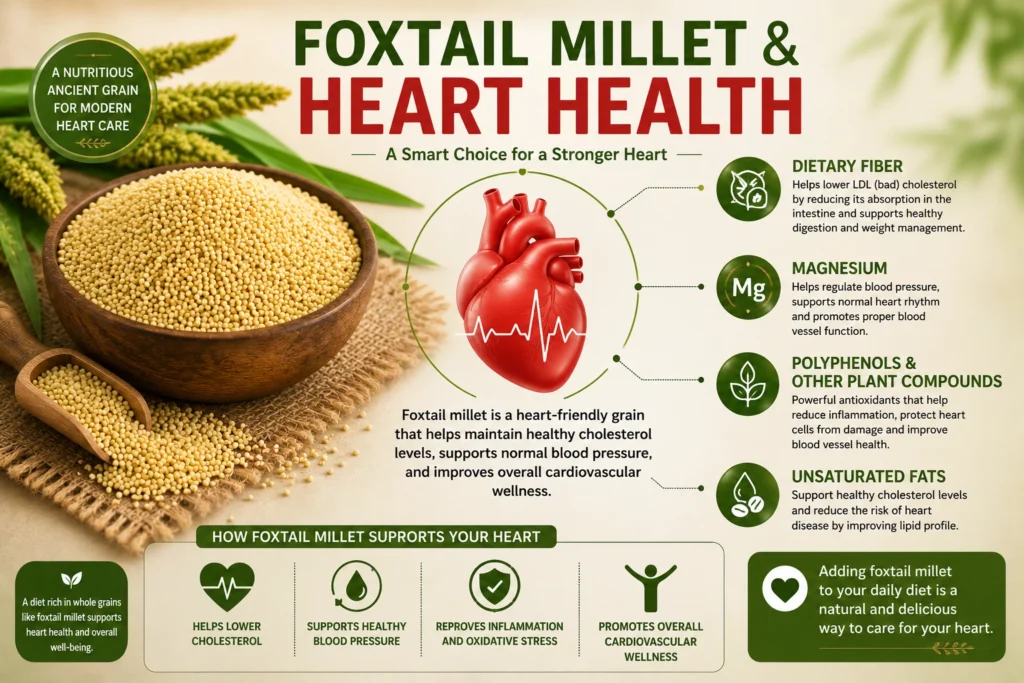
Foxtail millet contains:
- Dietary fiber
- Magnesium
- Polyphenols and other plant compounds
- Unsaturated fats
Foxtail millet a diet rich in whole grains and minimally processed plant foods is generally associated with better cardiovascular health.
Foxtail millet may therefore be a useful component of a heart-healthy dietary pattern, particularly when it replaces refined grains.
Foxtail millet should not, however, be described as a food that independently prevents heart attacks or heart disease.
6. Foxtail millet for iron
Foxtail millet provides dietary iron, making it useful as one component of an iron-rich diet.
Foxtail millet however, the iron in millet is non-heme iron, which is absorbed less efficiently than the heme iron found in meat, poultry, and seafood.
Improve iron absorption
Combine millet with foods containing vitamin C, such as:
- Lemon
- Guava
- Orange
- Amla
- Tomatoes
- Capsicum
- Broccoli
For example:
Foxtail millet + dal + vegetables + lemon
can be a nutritionally stronger combination than millet alone.
7. Foxtail millet and protein
Foxtail millet contains more protein than many refined cereal products, but it is not a complete substitute for high-quality protein foods.
For muscle maintenance and recovery, combine it with:
- Eggs
- Fish
- Chicken
- Milk or yogurt
- Dal
- Beans
- Chickpeas
- Soy
- Paneer
A meal containing millet and a good protein source is generally more nutritionally balanced.
8. Foxtail millet for bone health
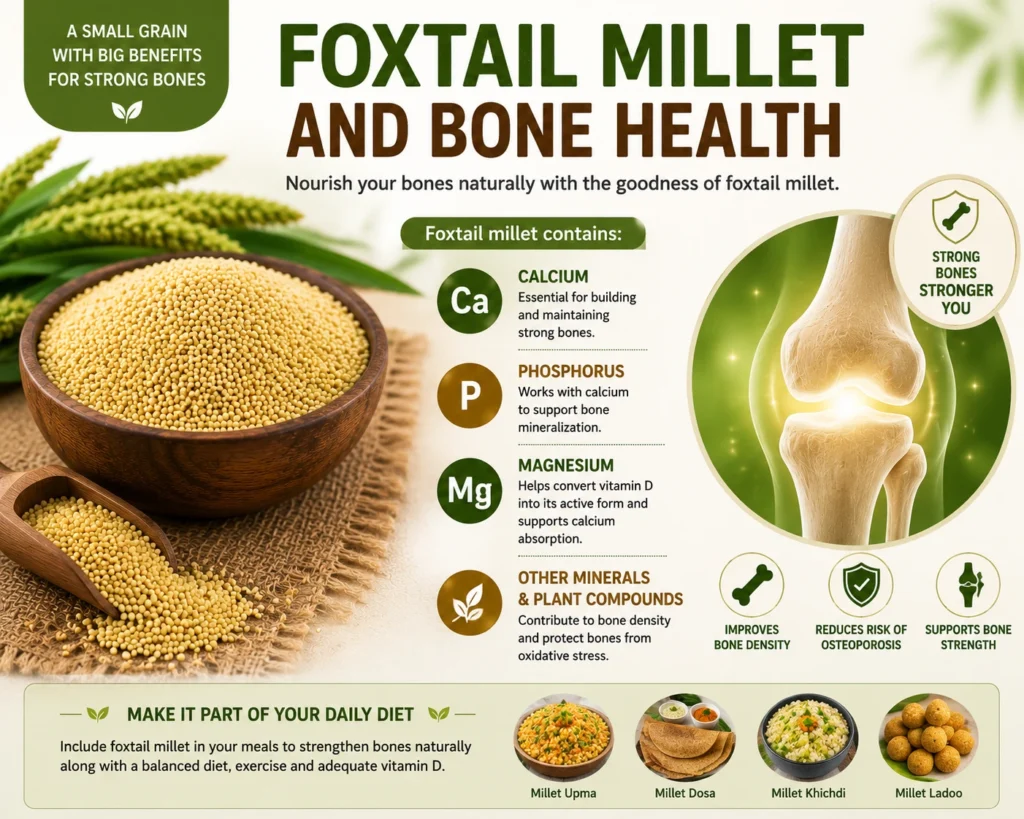
Foxtail millet contains minerals such as:
- Magnesium
- Phosphorus
- Calcium
Foxtail millet these nutrients participate in normal bone metabolism.
However, eating millet alone cannot significantly increase bone density. Bone health also depends on:
- Adequate calcium
- Vitamin D
- Protein
- Resistance exercise
- Healthy body weight
- Hormonal health
- Avoiding smoking
- Limiting excessive alcohol consumption
9. Foxtail millet and gluten
Foxtail millet is naturally gluten-free.
This makes it potentially suitable for people who need to avoid gluten, including those with celiac disease, provided the product is not contaminated with gluten during processing.
If someone has celiac disease, it is preferable to choose products specifically labelled gluten-free because cross-contact can occur during harvesting, processing, packaging, or preparation.
10. Foxtail millet and antioxidants
Foxtail millet contains various phenolic compounds and other phytochemicals.
Foxtail millet compounds have antioxidant activity in laboratory and food studies.
Antioxidants help protect cells from oxidative damage, but it is important not to overstate this finding.
Eating foxtail millet does not mean that it will “detox” the body or cure disease.
Foxtail millet potential antioxidant contribution is best considered as one part of an overall diet rich in:
- Vegetables
- Fruits
- Whole grains
- Legumes
- Nuts
- Seeds
11. Is foxtail millet good for diabetes?
This is one of the most common questions.
Potential advantages
Foxtail millet may be preferable to highly refined grains because it can provide:
- More fiber
- More micronutrients
- More protein
- Less processing than refined cereals
Research has investigated millets for their potential role in improving glycemic control, but individual responses vary.
Important for people with diabetes
Do not assume:
“Millet = unlimited food for diabetes.”
Foxtail millet still contains carbohydrates.
A practical approach is to:
- Keep the serving moderate.
- Pair it with protein.
- Add plenty of non-starchy vegetables.
- Avoid adding excessive oil or sugar.
- Monitor your glucose response if recommended by your healthcare professional.
12. Foxtail millet for PCOS
Foxtail millet may fit into a balanced diet for someone with PCOS because it provides fiber and micronutrients and can replace refined carbohydrate foods.
However, there is no strong evidence that foxtail millet alone treats or cures PCOS.
For PCOS, the overall dietary pattern, physical activity, sleep, body composition, and medical management are much more important than one particular grain.
13. Foxtail millet and thyroid health
There is sometimes concern about millets and thyroid function because some millet varieties contain compounds that may interfere with thyroid physiology under certain experimental conditions.
This does not mean that healthy people need to avoid foxtail millet.
For people with diagnosed thyroid disease, particularly those taking thyroid medication, it is better to maintain a varied diet and discuss substantial dietary changes with their clinician.
If taking levothyroxine, medication timing should follow the prescribing clinician’s instructions because several foods and supplements can affect its absorption.
14. How to cook foxtail millet
A simple method:
Ingredients
- 1 cup foxtail millet
- 2–3 cups water
- A small amount of salt, if desired
Method
- Wash the millet thoroughly.
- Soak it for approximately 20–30 minutes if desired.
- Drain.
- Add water.
- Cook until the grains become tender.
- Allow it to rest for several minutes.
- Fluff with a fork.
The amount of water depends on the desired consistency and cooking method.
15. Best ways to eat foxtail millet
Breakfast
- Foxtail millet upma
- Millet porridge
- Millet dosa
- Millet idli
Lunch
- Foxtail millet rice
- Millet vegetable pulao
- Millet curd rice
- Millet khichdi
Dinner
- Millet vegetable bowl
- Millet roti
- Millet soup combination
- Millet + dal + vegetables
Healthy combination
A nutritionally balanced plate can look like:
½ plate: non-starchy vegetables
¼ plate: protein
¼ plate: foxtail millet or another whole-grain carbohydrate
This is particularly useful for people trying to manage blood glucose and overall calorie intake.
16. Foxtail millet vs white rice
| Feature | Foxtail Millet | White Rice |
|---|---|---|
| (Foxtail millet) Fiber | (Foxtail millet) Generally higher | Generally lower |
| (Foxtail millet) Protein | (Foxtail millet) Generally higher | Moderate |
| (Foxtail millet) Micronutrients | (Foxtail millet) More diverse | Lower after refining |
| (Foxtail millet) Gluten | (Foxtail millet) Naturally gluten-free | Gluten-free |
| (Foxtail millet) Processing | (Foxtail millet) Can be minimally processed | Usually milled/refined |
| (Foxtail millet) Blood glucose | (Foxtail millet) May produce a more favorable response depending on preparation | Often produces a relatively rapid glucose response |
| (Foxtail millet) Calories | (Foxtail millet) Similar range when compared by dry weight | Similar range |
| (Foxtail millet) Diabetes suitability | (Foxtail millet) Can be included in controlled portions | Can also be included in controlled portions |
The key point is that portion size and preparation matter. Replacing rice with millet is not automatically beneficial if the millet is consumed in excessive amounts.
17. Foxtail millet vs other millets
| Millet | Common characteristics |
|---|---|
| Foxtail millet | Good source of fiber, protein and minerals |
| Finger millet (ragi) | Particularly notable for calcium |
| Pearl millet (bajra) | Rich in minerals and protein |
| Little millet | Fiber-rich traditional grain |
| Kodo millet | Contains fiber and various micronutrients |
| Barnyard millet | Often used as a rice alternative |
| Proso millet | Provides protein, fiber and minerals |
Different millets have different nutritional profiles, so rotating several varieties can provide dietary diversity.
18. Possible side effects of foxtail millet
Foxtail millet is generally safe as a food for most people, but some individuals may experience problems.
1. Bloating and gas
A sudden increase in fiber can cause digestive discomfort.
2. Allergic reaction
Millet allergy is uncommon but possible.
3. Excessive consumption
Eating very large portions can provide substantial carbohydrates and calories.
4. Antinutrients
Like many grains and legumes, millet contains naturally occurring compounds such as phytates that can reduce absorption of certain minerals.
Traditional processing techniques such as:
- Soaking
- Fermentation
- Germination
- Sprouting
can influence these compounds and may improve mineral bioavailability.
19. Who should be cautious?
People with the following situations should consider individualized dietary advice:
- Diabetes requiring close glucose management
- Significant digestive problems
- Known millet allergy
- Celiac disease requiring strict gluten avoidance
- Significant thyroid disease
- Kidney disease requiring mineral or carbohydrate restrictions
- A medically prescribed restricted diet
For people with chronic conditions, millet can often be incorporated into the diet, but the appropriate amount depends on the individual’s nutritional requirements.
20. How much foxtail millet can you eat?
There is no single universally correct serving size.
A practical starting point is approximately ½–1 cup cooked millet as part of a meal, adjusted according to your energy and carbohydrate requirements.
For diabetes or weight management, the serving should be individualized.
Instead of asking:
“How much millet should everyone eat?”
it is better to consider:
What is the total carbohydrate content of the meal?
21. Is foxtail millet better than rice?
It can be nutritionally advantageous in some situations, but it is not automatically “better” for everyone.
Foxtail millet generally provides more fiber and protein than refined white rice and offers a broader range of micronutrients.
However, rice can also be part of a healthy diet.
The more important dietary change is often:
Refined carbohydrates → minimally processed whole grains + vegetables + adequate protein
rather than simply:
Rice → millet
22. Can you eat foxtail millet every day?
For most healthy individuals, foxtail millet can be consumed regularly as part of a varied diet.
However, there is no nutritional requirement to eat it every day.
A better strategy is to rotate carbohydrate sources:
- Foxtail millet
- Brown rice
- Oats
- Whole wheat
- Ragi
- Barley
- Other whole grains
- Legumes
Dietary variety improves the overall range of nutrients and reduces dependence on a single food.
23. Foxtail millet for hair and skin
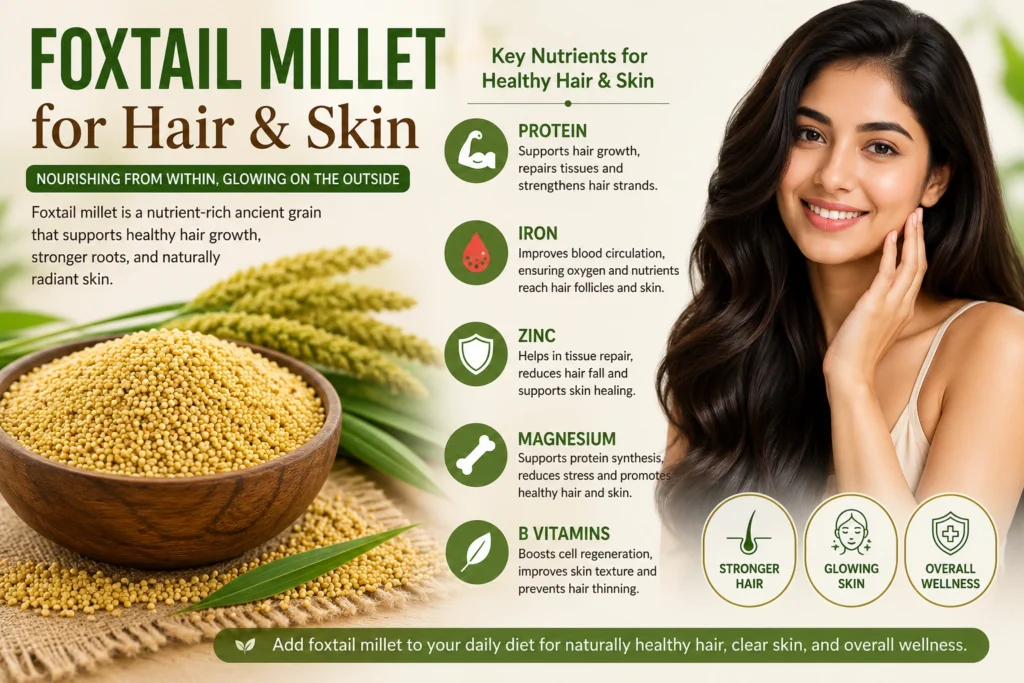
Foxtail millet supplies nutrients such as:
- Protein
- Iron
- Zinc
- Magnesium
- B vitamins
These nutrients contribute to normal skin, hair, and tissue function.
However, eating foxtail millet will not automatically stop hair loss or cause rapid hair growth.
Hair health depends on overall nutrition and many other factors. Deficiencies in iron, vitamin B12, vitamin D, zinc, protein, and other nutrients can contribute to hair problems.
24. Best healthy foxtail millet meal
A balanced meal could contain:
Foxtail millet + dal + leafy vegetables + mixed vegetables + egg/fish/paneer + lemon
This combination provides:
- Complex carbohydrates
- Protein
- Fiber
- Vitamins
- Minerals
- Healthy fats
- Better overall satiety
Bottom line
Foxtail millet is a nutritious, gluten-free traditional grain that can be a healthy alternative to refined cereals. It provides carbohydrates, fiber, protein, minerals, and plant bioactive compounds.
Its strongest practical advantages are its higher fiber and nutrient density compared with refined grains, its versatility, and its ability to fit into diets focused on whole foods.
However, it is important to avoid exaggerated claims. Foxtail millet does not cure diabetes, thyroid disease, PCOS, obesity, or other medical conditions. For diabetes and weight management in particular, portion size and the entire meal matter as much as the choice of grain.
Related Posts
Stay Informed With the Latest & Most Important News
Previous Post
Next Post












Advertisement

-
 01Boost your gut health and immune system naturally
 -
 02Regenerative Stem Cell Treatments in Orthopedics: A Complete Guide to Healing Joints, Bones, and Soft Tissues Naturally
 -
 03Can You Get Vitamin D3 During Sunrise or Sunset? A Scientific Guide
 -
 04The Ultimate Guide to Making Sesame Seed Milk: Recipe, Nutrition & Amazing Health Benefits
 -
 05Country Eggs: Detailed Information, Nutrition, Benefits, Risks, and How They Compare With Farm Eggs
 -
 06Extraordinary Lasoda Glue Berry: Health Benefits, Nutrition, and Traditional Uses
 -
 07Seasonal mushrooms and snake hole mushrooms: A complete guide